LisbonLisboaPortugal.com
The best independent guide to Lisbon
LisbonLisboaPortugal.com
The best independent guide to Lisbon
Igreja de São Roque Church, Lisbon Guide
The bland facade of the Igreja de São Roque hides one of the most exquisite and decorative churches of Lisbon, and possibly Portugal. Inside the white washed church and adjoined museum are some of the finest examples of Jesuit sacred art and the beautiful chapel Saint John the Baptist. If a tourist was to only visit the interior of one church in Lisbon the Igreja de São Roque would be the church of choice.
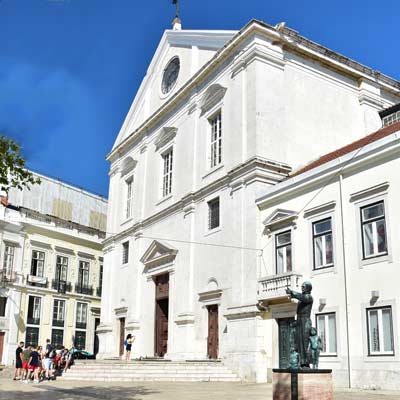
The bland exterior of the Igreja de São Roque
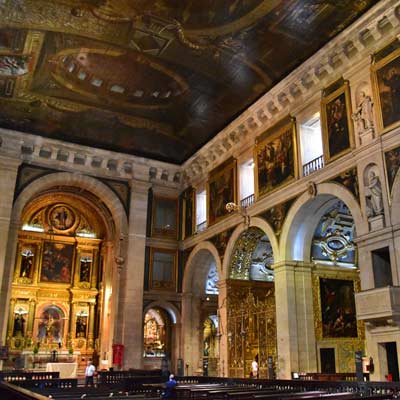
The ornately painted interior of the church
Tourist Information for the Igreja de São Roque, Lisbon
The Igreja de São Roque is open between 9:30-5:00 every day and there is no entrance fee. The Museum of Igreja de São Roque is open every day except for Mondays and is open from 10:00 until 18:00 with later opening on Thursdays between 14:00-21:00. The entrance fee for the museum is €2.50 but is free on Sundays until 14:00. The closest metro station is Baixa-Chiado but this involves a walk up a steep hill.
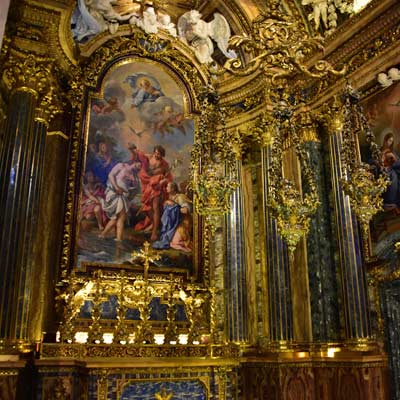
The beautiful Capela de São João Baptista
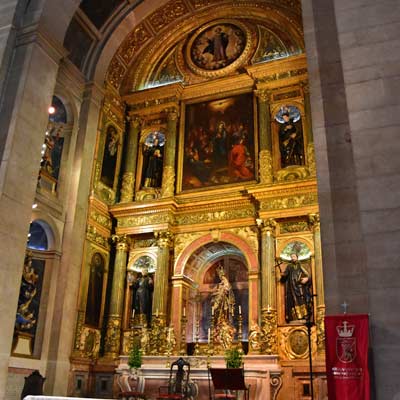
The altar of Igreja de São Roque
History of the Igreja de São Roque Lisbon
The Igreja de São Roque was originally a shrine which housed a relic from São Roque (Saint Rocco or Saint Roch). São Roque (1295-1327) was canonized for his healing of plague victims and his feasts day commemorated on the 16 August. After São Roque’s death he became a symbol for the protection from the Black Death plague which ravaged much of Europe.
King Manuel I of Portugal believed that a relic from Saint Roque would protect Lisbon and he constructed a small shire to the west of Lisbon to house the relic. The holy relic provided little protection for Lisbon which suffered horrendously at the hands of the plague.
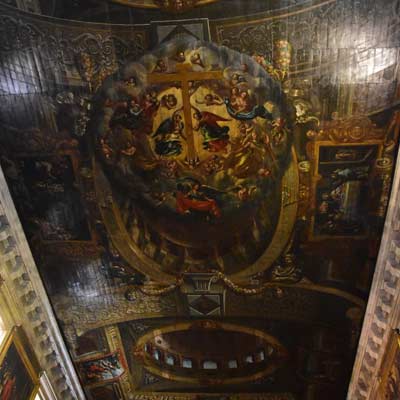
The roof painting
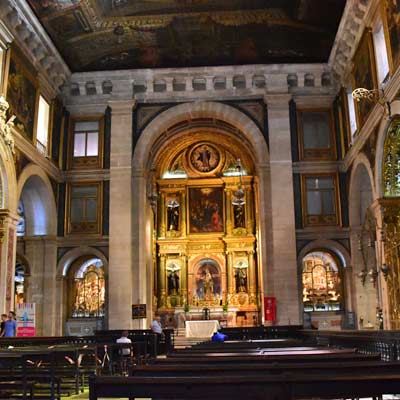
The church is refreshingly calm and tranquil
The shire remained of little importance until the latter half of the 16th century when the chapel became gathering location for the Society of Jesus (Jesuit) which followed the philosophy of the Catholic Counter-Reformation. The devotion and money of the society transformed the humble shrine of São Roque into one of the most significant and decorative churches of Lisbon.
The Igreja de São Roque was the first Jesuit church constructed in Portugal and one of the earliest anywhere in the world. The church served as the Jesuit’s main religious centre for over 200 years, during this time there were several significant decorative improvements which gives the interior of the church its varied styles and different types of artworks that including gilt wood, glazed tiles and Florentine mosaics.
The most significant addition to the Igreja de São Roque was the construction of the chapel Saint John the Baptist, commissioned by King John V in 1742, which is considered to be a masterpiece of 18th century European art. The chapel, apart from being beautiful, is unique in that it was constructed twice; first in Rome to be blessed by Pope Benedict XIV then dismantled, transported to Lisbon and rebuilt in the Igreja de São Roque.
Over the 200 years the Jesuit Society had grown in power and influence to such an extent that the Marquis of Pombal forced the society out of Portugal in the late 18th century fearing its influence in government. The Igreja de São Roque managed to survive the devastation earthquake of 1755, one of only a handful of buildings in the westerly districts not to be completely destroyed.
In 1905, the Museum of the Treasure of the Chapel of Saint John the Baptist was created adjoining the church, with the purpose of showing to the public the important baroque goldsmiths and religious vestments collection and the chapel of Saint John the Baptist.
Discover more of Lisbon with our most popular guides


About this guide: I'm Philip Giddings. I live in Graça with my Portuguese wife Carla, whose family are Lisboetas going back generations. I've been visiting Portugal since 2001, writing the independent guides at LisbonLisboaPortugal.com since 2009, and the site is now my full-time work. Carla first brought me up to Lisbon on an early trip, and twenty-five years on we are still walking the city together: summers on the packed beaches, quiet Saturdays at the Feira da Ladra, and hunting for a heater for our flat when the chilly winter arrives.
This site has 189 guides on Lisbon. It takes no payment from tourist boards, tour operators, or attractions for inclusion, and is funded by affiliate commissions on tour bookings, disclosed on every page that contains them. Every practical detail (ticket prices, opening hours, bus routes, time-slot policies) is checked against the official sources and verified in person on the walks I make through the city each week. Read the full story here.
 -
-
If you've found our content valuable, we'd welcome your support.
The digital publishing landscape has evolved significantly. As a small independent publisher, we face growing challenges. Search engines increasingly favour paid content over organic results, while AI-generated content often reproduces original work without attribution.
To support our work, please consider bookmarking this page (press Ctrl + D) for quick access. If you find an article helpful, we'd be grateful if you'd share it with friends on social media.
For specific questions, please see our Reddit community at r/LisbonPortugalTravel.
Should you notice any outdated or incorrect information, please contact us at [email protected]
Thank you for helping us continue to provide valuable content in an increasingly challenging digital environment.