LisbonLisboaPortugal.com
The best independent guide to Lisbon
LisbonLisboaPortugal.com
The best independent guide to Lisbon
Lisbon Ferries for visitors in 2026
Lisbon extends along the banks of the Tejo Estuary, and the commuter ferries are an integral part of the city’s public transport network.
The ferries provide an inexpensive means of travel from the residential districts on the southern banks of the Tejo Estuary to central Lisbon on the north. These ferries also avoid the horrendous rush hour traffic on Ponte 25 de Abril suspension bridge
As a visitor to Lisbon, the commuter ferries provide an enjoyable boat ride, which are a fraction of the price of the expensive tourist cruises.
The most popular ferry for visitors crosses from Cais do Sodré to Cacilhas, and is the first stage of the journey to the Cristo Rei statue, with its amazing views over Lisbon. The Cacilhas ferry route is very scenic as it passes close to the suspension bridge, but sadly the ferries are designed for commuters and have no outside viewing deck.
I have lived in Lisbon for the last five years and have been visiting since 2001 with my Portuguese wife. We have used these ferries hundreds of times, whether crossing to Cacilhas for lunch or on the way to see friends in Montijo. This guide is based on my firsthand experience, so you can get the most from this enjoyable ferry ride.
Related articles: Cristo Rei statue
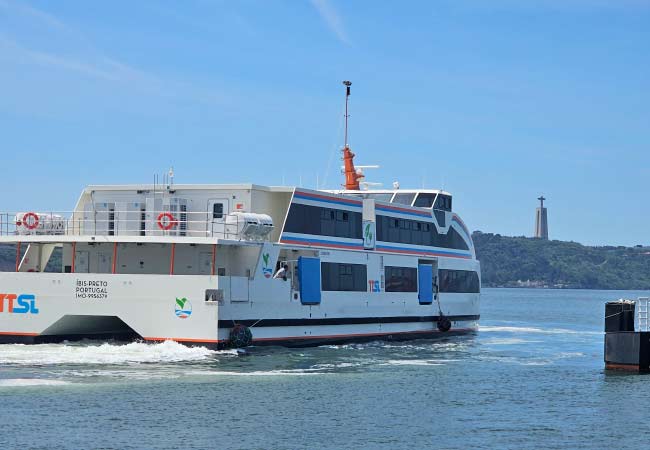
The ferry from Cais do Sodré to Cacilhas with the Cristo Rei statue in the distance
Lisbon ferry routes
There are five ferry routes, with three terminals in Lisbon and four terminals on the southern banks. The ferry routes are:
• Terreiro do Paço to Barreiro
• Cais do Sodré to Cacilhas (recommended tourist route)
• Cais do Sodré to Montijo
• Cais do Sodré to Seixal
• Belem to Porto Brandão and Trafaria (recommended tourist route)
In Lisbon, Terreiro do Paço and Cais do Sodré are major ferry terminals close to the city centre, while Belem is a lesser terminal to the west of the city. The busiest route is Cais do Sodré to Cacilhas.
The interactive map below displays the routes in relation to the city.
Orange) Belem to Trafaria Yellow) Cais do Sodré to Cacilhas Green) Cais do Sodré to Seixal Red) Cais do Sodré to Seixal Blue) Terreiro do Paço to Barreiro
Lisbon ferries for tourists
For you as a visitor, there are only two routes you should consider taking.
The main one to take is from Cais do Sodré to Cacilhas. It is the shortest of all the ferry routes, with a crossing of less than 10 minutes, but it is also the most interesting. It crosses just to the east of the suspension bridge, with views of it, while on the other side you can see the waterfront of Baixa and the Ribeira das Naus. This ferry ride is also the first stage of the journey to the Cristo Rei statue, which is the main reason most tourists make the trip in the first place.
The second interesting route, primarily for the views, is the crossing from the Belém terminal to Trafaria. There is nothing to see on the other side, but the ferry ride provides waterside views of Belém for less than the price of a coffee, and it is a pleasant, relaxing activity after all the walking that Belém usually entails.
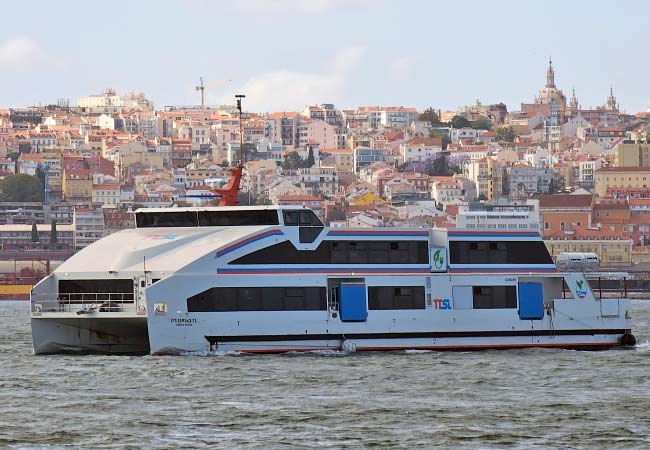
The new electric catamaran crossing from Cais do Sodré to Cacilhas. I do find them a great improvement, much quieter and smoother than the old orange ferries.
I personally would not consider the other three routes, mainly due to the length of the journey and the almost nothing to see on the other side of the crossing. Terreiro do Paço to Barreiro does provide waterside views of Alfama, but for much of the 20-minute journey you will be looking over the estuary and industrial docks of Cacilhas. The route Cais do Sodré to Montijo is the longest and most expensive, and in my opinion it's not really worth it.
These ferries are designed for mass transport and not tourist rides, so do set your expectations accordingly. There are no outdoor decks, the seats are plastic and not particularly comfortable, and the windows are often dirty, blurring photos. But at €2.00 a fare, it's a magnitude lower than the boat cruises.
As these are commuter ferries, always try to avoid traveling at rush hour; more precisely, heading into Lisbon from 8am to 10am and leaving the city from 4pm to 6pm. Traveling at these times, do expect jostling from tired commuters and being stuck in a middle aisle seat.
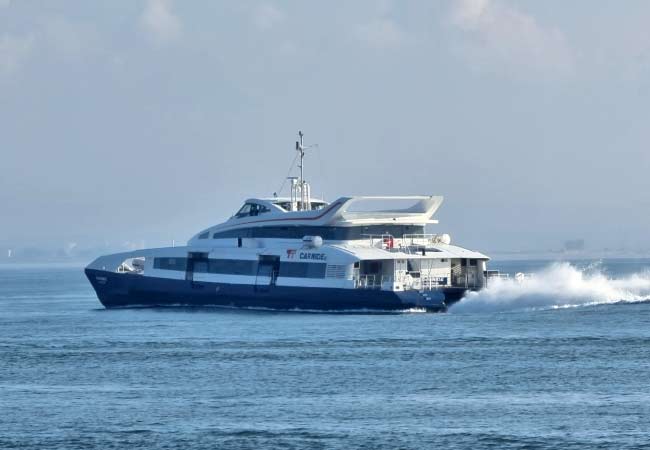
The older catamaran ferry from Terreiro do Paço to Barreiro
Fares and tickets for Lisbon’s ferries
Each route has its only fare price. There are no return tickets so for a return ticket two singles need to be purchased. The Zapping fare, which is explained below makes the journey slightly cheaper.
• Terreiro do Paço to Barreiro - €2.65 (Zapping Fare €2.40)
• Cais do Sodré to Montijo - €3.00 (Zapping €2.75)
• Cais do Sodré to Seixal - €2.65 (Zapping €2.40)
• Cais do Sodré to Cacilhas - €2.00 (Zapping €1.60)
• Belem to Porto Brandão and Trafaria - €1.40 (Zapping €1.20)
The ferry fares are charged to the Navegante reusable card, which is used by the entire public transport network of Lisbon. The initial purchase of the Navegante card is €0.50.
Zapping
The zapping ticket is when pre-paid credit is loaded onto the Navegante card and the fare is taken when you swipe onto the public transport.
This is very useful for the ferry, as not only does it make the ride cheaper but it removes the hassle of using the older ticket machines or standing in a long queue for the ticket office.
The issue with the zapping fare is that it can't be purchased from the ferry terminal but has to be bought from a metro station. This is no real problem if you are at Cais do Sodré, as there is a metro station attached to the ferry complex; just enter the station and go down one level to the metro station.
Having a Navegante card with €15 worth of zapping credit is extremely useful while in Lisbon, as it means you can board any public transport without the hassle of buying tickets.
Insight: When friends visit me in Lisbon, I always give them a pre-loaded Navegante Zapping card.
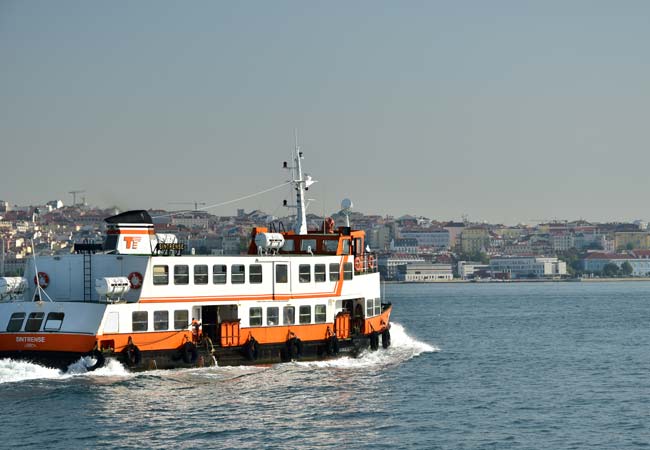
The Cacilhas ferry unfortunately does not have a viewing deck
Lisbon ferry schedules
Lisbon ferries are an important means of transport for commuters and workers, so there are many departures with services starting early in the day and continuing late into the night. There are more departures during the working week and less at the weekend.
The Terreiro do Paço to Barreiro and Cais do Sodré to Cacilhas are the busiest routes, while the Belem route only has one boat and departures are infrequent.
The ferries of Lisbon are operated by Transtejo Soflusa (known as TTSL), and the latest timetables can be seen on their website:
• Terreiro do Paço - Barreiro
• Cais do Sodré - Cacilhas
• Cais do Sodré - Montijo
• Cais do Sodré - Seixal
• Belém - Trafaria - Porto Brandão
(please note links open new tabs)
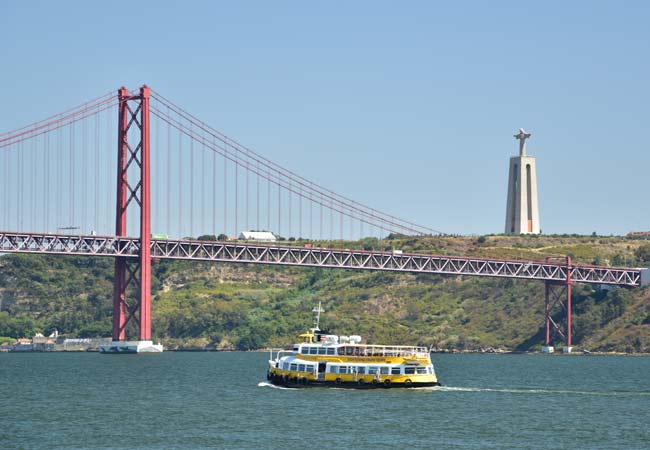
A tour boat passing beneath the suspension bridge
Cais do Sodré ferries
Cais do Sodré ferry terminal is connected to the green metro line and is also a major railway station, with trains to Cascais and the Estoril coastline. The actual ferry terminal is in its own separate building, just to the south of the train station.
From Cais do Sodré there are three routes, to Cacilhas, Montijo and Seixal. The ferries to Montijo and Seixal use the diesel powered catamarans, while the new electric ferries operate on the Cacilhas route. These electric ferries are phasing out the traditional orange ferries, and are surprisingly smooth and quiet.
Unfortunately, neither style of ferry has open-air viewing decks. Cacilhas is the better tourist route for most visitors who wish a ride on the ferry, as it passes close to the 25 de Abril suspension bridge. The journey only takes 10 minutes to cross the river.
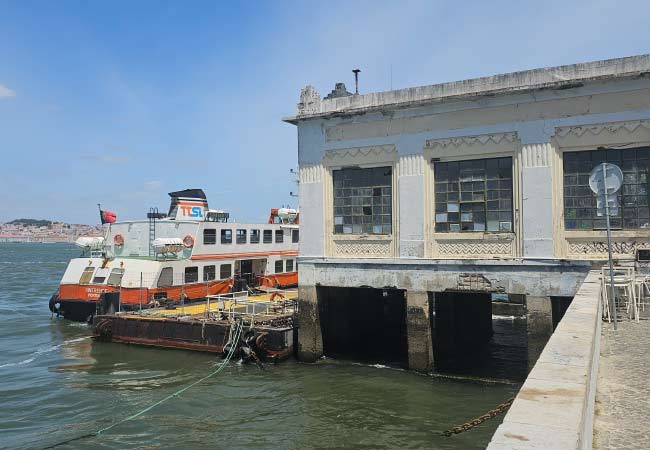
The ferry terminal in Cacilhas
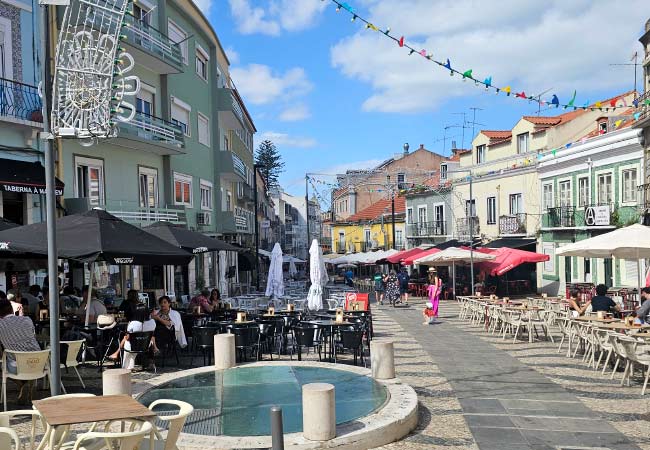
Personally, I would plan to explore Cacilhas instead of riding the first ferry back. The first impression of Cacilhas is a bit grim with the abandoned wharfs along the waterfront, the decaying dry docks of Lisnave and the ugly 1970s tower blocks, but the town has character. There are many excellent fish restaurants along the Rua Cândido dos Reis, such as ‘A Toca’, ‘Cova Funda’, ‘Meating Steakhouse’ and even a Korean barbecue restaurant Han Table Barbecue. If you do plan to come for food, do not get suckered into eating at the restaurant on the plaza overlooking the ferry terminal as some are poor.
The other activity is to walk along the Cais do Ginjal waterfront, which once past the demolished warehouses leads to the pretty Jardim do Rio and the famous Ponto Final restaurant. I really like the Jardim do Rio and is a pleasant spot to bring an afternoon picnic or bottle of wine for sunset.
The other notable attraction at Cacilhas is the Dom Fernando II e Glória, the last sailing ship constructed by the Portuguese navy.
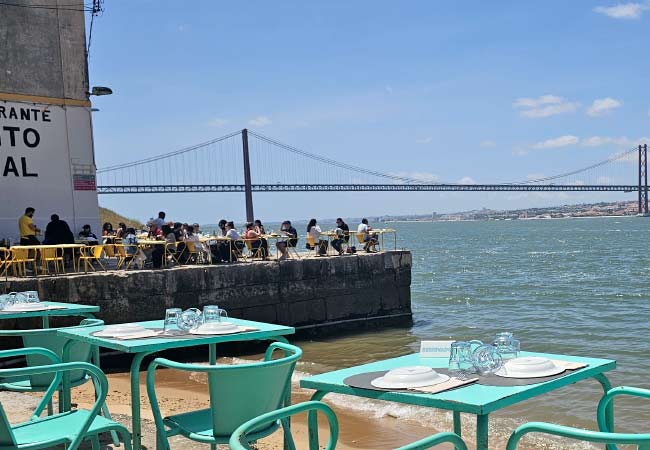
Ponto Final, with its water side dining and views of the 25 de Abril suspension bridge.
To the Cristo Rei Statue
One of the main reasons for crossing to Cacilhas is to visit the Cristo Rei statue and the amazing viewpoint at the top of the monument. At Cacilhas there are two possible routes to Cristo Rei: either by bus or the Boca do Vento Elevator and walking.
The bus is the faster and better option. The 3001 bus route, operated by Carris Metropolitana, departs from Cacilhas bus station and stops in front of the Cristo Rei complex.
The fare costs €1.20 for a single and there are up to three departures every hour during the summer, which drops to hourly services in the winter. There are always tuk-tuk drivers who cost much more (€5-6 per person) if the wait for the bus is too long.
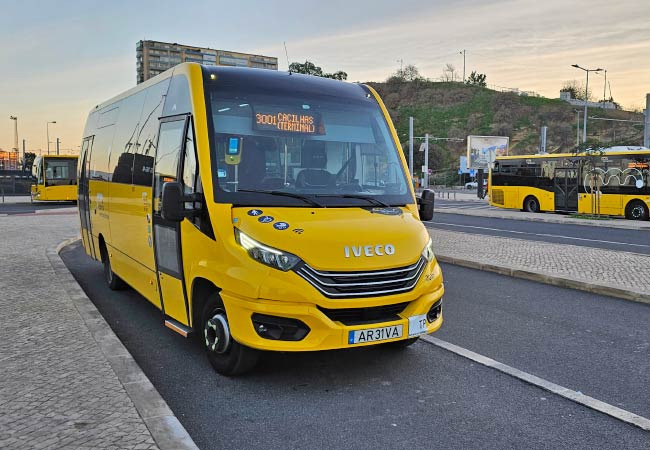
The alternative route to Cristo Rei is to walk along the waterfront to the Boca do Vento Elevator, and walk through the residential streets to the monument. This walk is much longer than most people expect. The first section is a mixed bag, with views over the estuary and Lisbon but walking along the edge of demolished warehouses. For what could be one of the finest walks along the Tagus, it is sadly lacking.
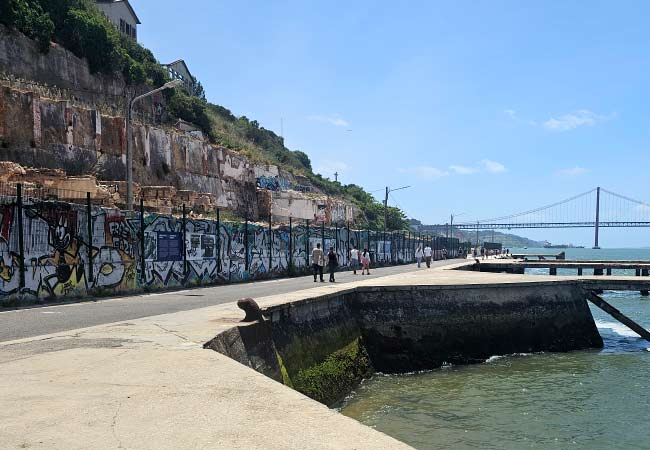
The Rua do Ginjal, even on a sunny June day it seems shabby and uninviting to walk along
The Boca do Vento Elevator is free to ride but it is another 1.8km to Cristo Rei from the top of the lift. This second part of the walk is mainly through bland residential streets with a couple of minor sights such as the Casa da Cerca, Contemporary Art Center and the Convento de São Paulo de Almada.
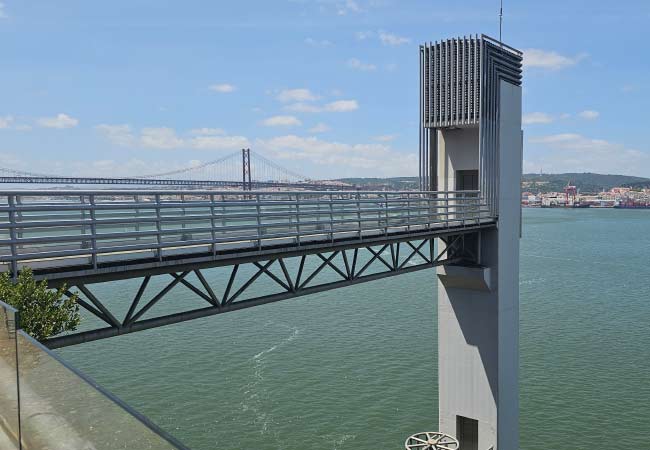
The view from the top of the Elevador Panorâmico da Boca do Vento
The Belem ferry
The Belem ferry departs from the western side of Lisbon and is a great activity for visitors who have more time to spend in the district. The main issue with the Belem ferry is the infrequent departures (as there is only one boat) and the return journey is much longer than all of the other ferry routes.
The Belem ferry makes two stops on the southern bank, at Porto Brandão and then Trafaria, but there is nothing to see at either of these destinations. The Belem ferry departs from the Belem ferry terminal, which is half-way between the marina and the MAAT Museu (housed in the old power station).
Related articles: Belem Guide
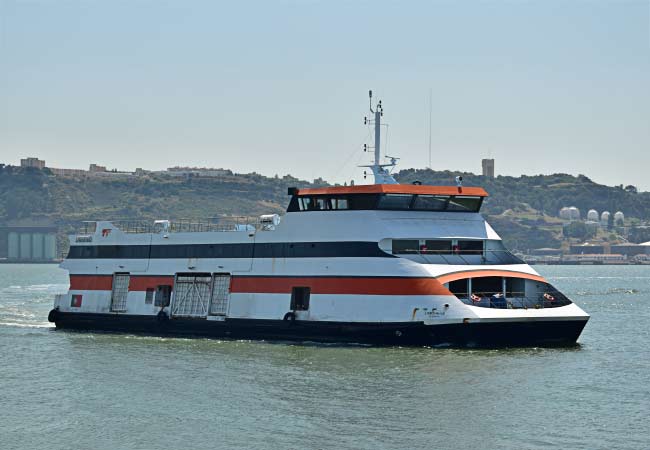
The Belem ferry
Terreiro do Paço ferry
The Terreiro do Paço ferry terminal is on the southern edge of the Praça do Comércio and is served to the blue metro line. The Paço to Barreiro is the longest ferry route and uses the faster catamarans. This route provides the best views over Alfama and the eastern side of Lisbon, but Barreiro is simply a ferry terminal and a non-descript town.
Discover more of Lisbon with our most popular guides


About this guide: I'm Philip Giddings. I live in Graça with my Portuguese wife Carla, whose family are Lisboetas going back generations. I've been visiting Portugal since 2001, writing the independent guides at LisbonLisboaPortugal.com since 2009, and the site is now my full-time work. Carla first brought me up to Lisbon on an early trip, and twenty-five years on we are still walking the city together: summers on the packed beaches, quiet Saturdays at the Feira da Ladra, and hunting for a heater for our flat when the chilly winter arrives.
This site has 189 guides on Lisbon. It takes no payment from tourist boards, tour operators, or attractions for inclusion, and is funded by affiliate commissions on tour bookings, disclosed on every page that contains them. Every practical detail (ticket prices, opening hours, bus routes, time-slot policies) is checked against the official sources and verified in person on the walks I make through the city each week. Read the full story here.