LisbonLisboaPortugal.com
The best independent guide to Lisbon
LisbonLisboaPortugal.com
The best independent guide to Lisbon
Alcântara, Lisbon: an independent travel guide for 2026
Stand anywhere in the Alcântara valley and you will hear it before you see it. A low, constant hum, the sound of traffic crossing the Ponte 25 de Abril far above the rooftops. The bridge towers over everything here, and in many ways it sets the tone for the district beneath it: industrial bones, modern energy, and a character quite unlike anywhere else in Lisbon.
Alcântara is really two districts wearing one name. Down in the valley sits the former industrial zone, once a bleak sprawl of abandoned warehouses and now one of the most fashionable corners of the city. At its heart is Lx Factory, a derelict textiles factory reborn as a hub of art studios, independent shops and bars, all wrapped in some of the boldest urban art in Lisbon. Walk up the hill and the mood changes completely.
Here you will find the residential Alcântara that wealthy 19th-century Lisboetas built to escape the crowded inner city: grand villas, the pretty round chapel of Santo Amaro, and the bustling Largo do Calvário, where the tram still rattles in from the centre.
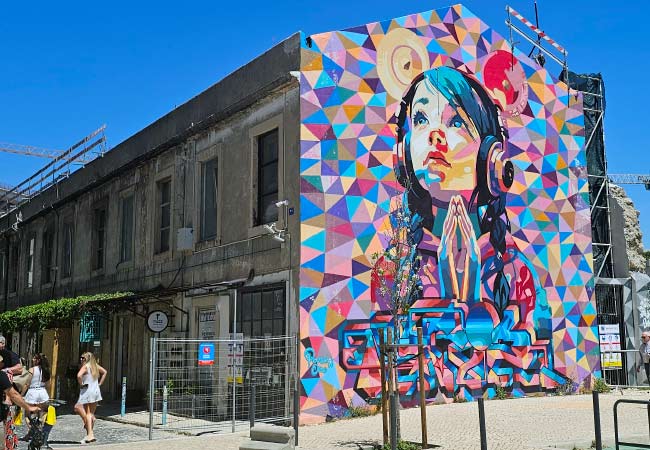
Urban art in Lx Factory
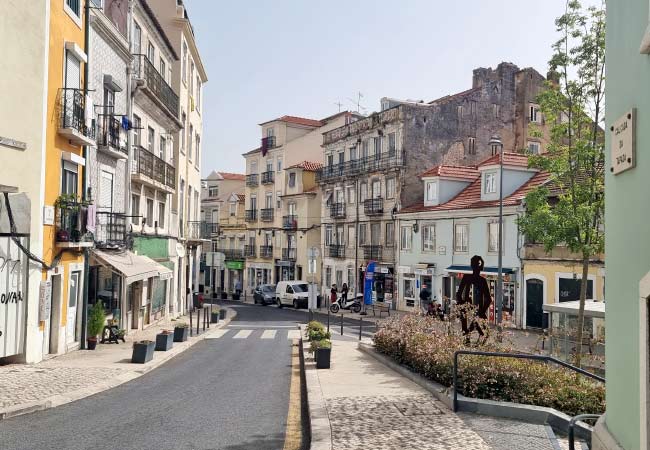
Alcântara still retains its Portuguese atmosphere and character, such as the Calçada da Tapada
This is an area of the city where the mix of people is as interesting as the buildings. Artists and digital nomads share café tables with older Portuguese residents and smartly dressed office workers, and somehow it all works. If you want to see what modern Lisbon actually looks like, away from the tiled postcards of Alfama, this is for you.
Sadly most visitors never give Alcântara much time. They come for an hour to wander Lx Factory, and then most leave. That is a shame as the district offers much more: high-end restaurants at the Docas marina, the superb Museu do Oriente and quiet green escapes in the Tapada das Necessidades. You could see the highlights in two hours. I would give it half a day, and have it follow a morning in neighbouring Belém, with lunch here rather than there.
I have been exploring Portugal since 2001, and after five years of living in Lisbon with my Portuguese wife, Alcântara is the district I take friends to when they tell me they have already seen the city. This guide shares what we have learned, so you can plan a visit that goes well beyond Lx Factory.
My highlights of Alcântara
Ponte 25 de Abril: The great suspension bridge defines the district. You will hear its hum from every street in the valley, and from the Passeio Carlos do Carmo, with the Cristo Rei statue across the water, it makes one of the finest views in Lisbon.
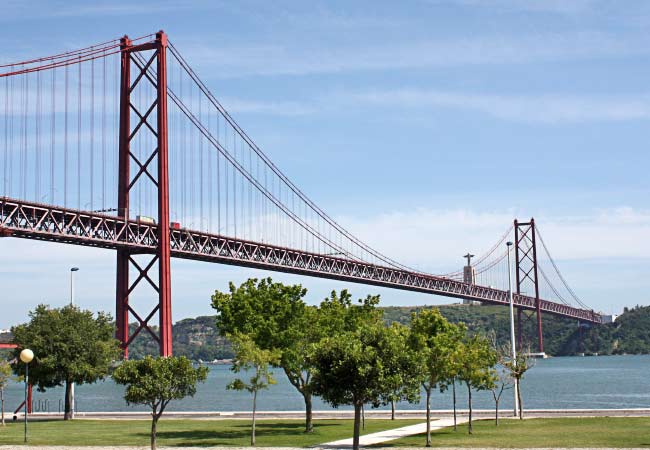
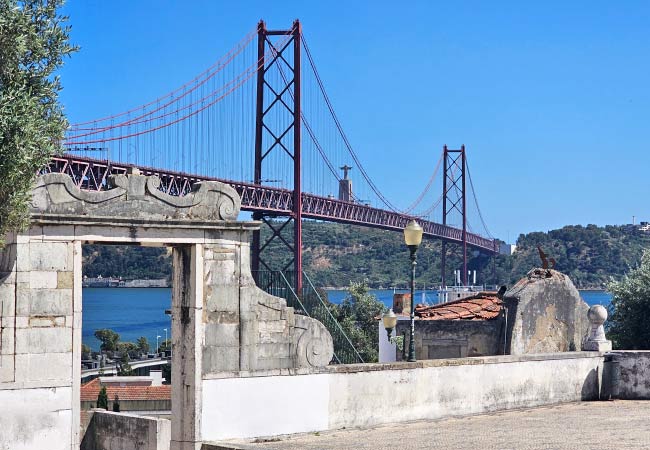
The view of the Ponte 25 de Abril from the Jardim Docas da Ponte
Lx Factory: The original artisan quarter of the city, packed with independent shops, bars and provocative modern art. Some of its quirky edge has been lost as the district has gentrified, and tourist-focused shops have crept in. It is still worth your time, not least for the Ler Devagar bookshop, one of the quirkiest in the world.
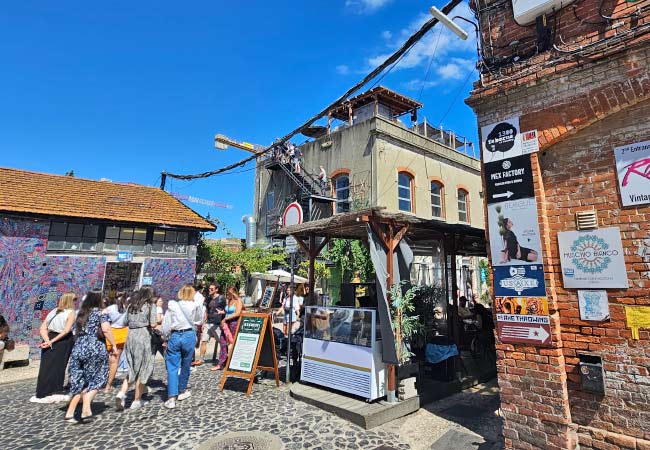
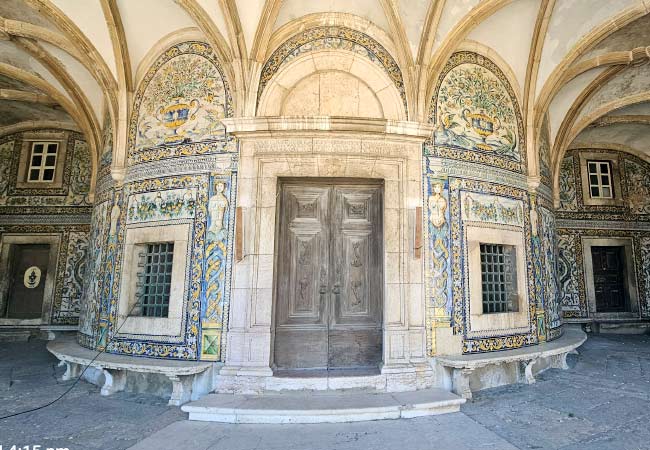
Capela de Santo Amaro: A small, round chapel on the hillside above the valley, with 17th-century tile paintings inside and one of the best views of the Tejo Estuary from its terrace. Few visitors make the climb, and hence it is my favourite quiet viewpoint.
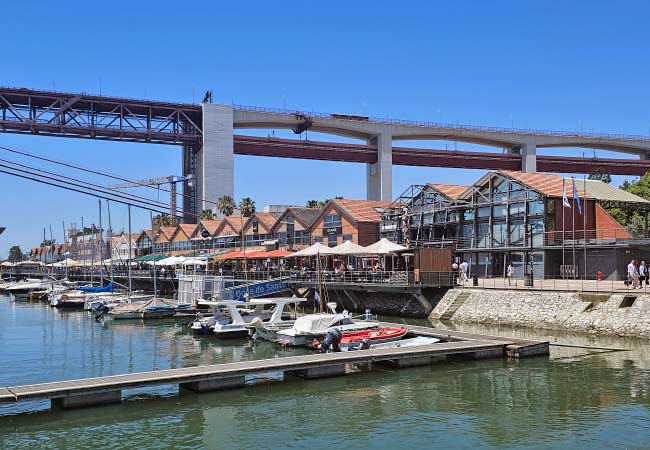
The Docas: The old warehouses of the Santo Amaro docks now hold restaurants and bars overlooking the marina. This is where I would suggest a long lunch, especially if you have spent the morning fighting the crowds in Belém.
How long do you need in Alcântara?
This is a district where the visit stretches to fit the time you give it.
A simple visit takes around two hours: Lx Factory, the Docas, a stroll along the waterfront gardens of the Jardim Docas da Ponte, then the uphill walk to the Capela de Santo Amaro before returning to the Largo do Calvário for the tram back to central Lisbon.
If you enjoy museums, add the Museu do Oriente, the Museu da Carris and the Macau Museum, or continue along the waterfront to the MAAT and its rooftop viewpoint. If you want calm instead, and after a few days in central Lisbon you may well do, head for the gardens of the Tapada das Necessidades, the southern edge of Monsanto park, or the hike up to the Miradouro do Bairro do Alvito. And for the authentic Portuguese side of the district, wander the quiet streets around the Jardim Avelar Brotero and the Pestana Palace hotel. These are the streets I walk when I want to remember what the area felt like 20 years ago.
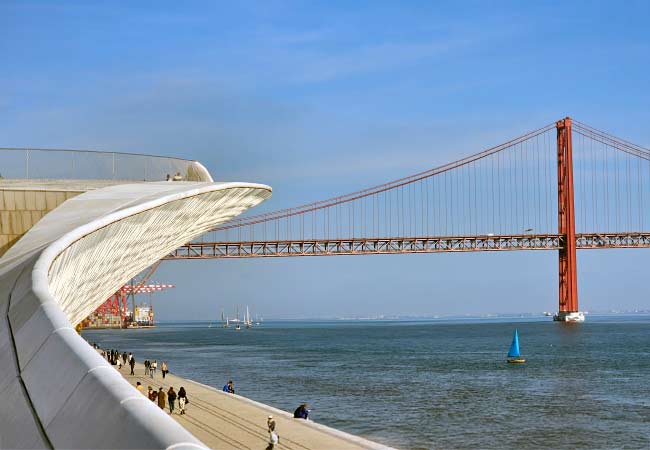
The view from the top of the MAAT museum
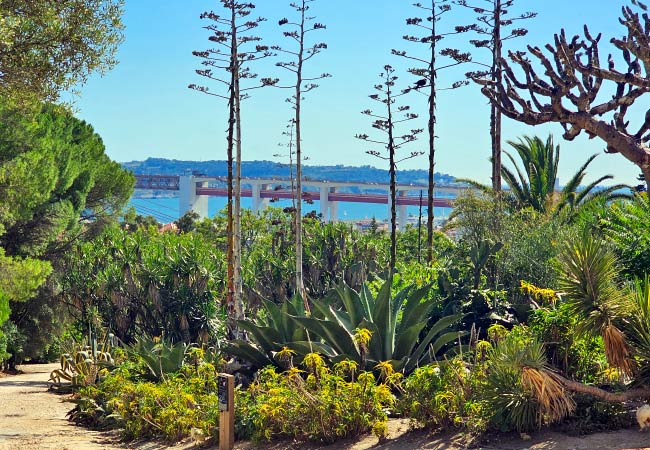
The peaceful gardens of the Tapada das Necessidades are where I head to escape the July chaos of living in central Lisbon
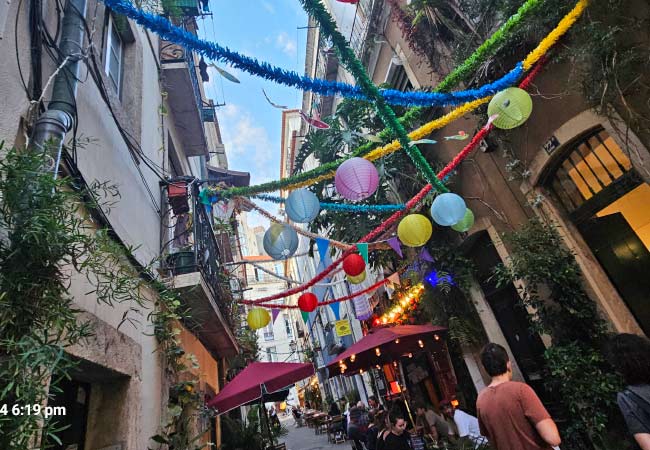
A green street about a 15-minute walk from Lx Factory
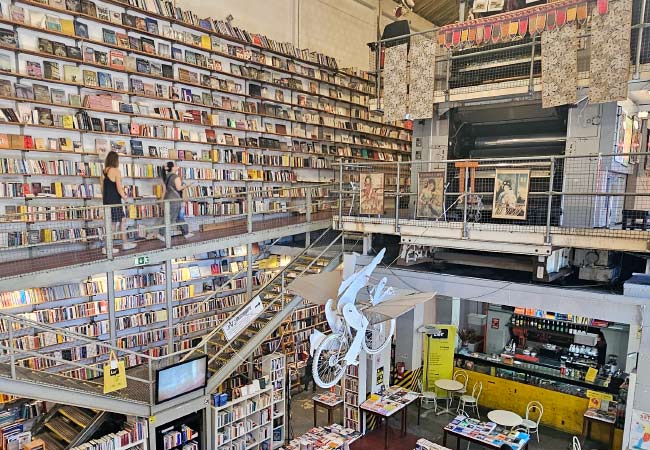
The Ler Devagar bookshop is housed in a former printing factory, with the original printing press on the upper floor
A suggested walking tour of Alcântara
It is easy to get lost in Alcântara and miss the sights, so I have created a suggested tour of the district, shown on the map below. The tour begins and ends at the Largo do Calvário, which is the best tram stop for the district.
Legend: 1) Largo do Calvário 2) Lx Factory 3) Ler Devagar bookshop 4) Pilar 7 (Viewing platform) 5) Museu do Oriente 6) Docas 7) Ponte 25 de Abril 8) Jardim Docas da Ponte 9) MAAT museum 10) Museu da Carris 11) Capela de Santo Amaro 12) Pestana Palace hotel 13) Jardim Avelar Brotero 14) Largo das Necessidades viewpoint 15) Palácio das Necessidades 16) Tapada das Necessidades park 17) Miradouro do Bairro do Alvito viewpoint
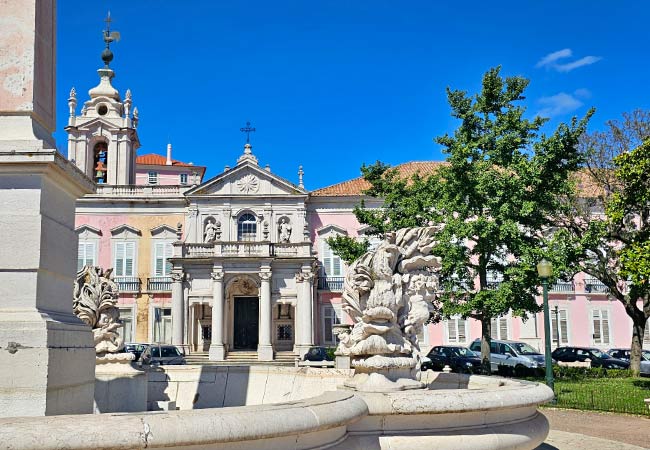
The Palácio das Necessidades and the Largo das Necessidades
Alcântara is often combined with a trip to Belém, as the two districts sit side by side on the western edge of the city. There is a lot to see in Belém, almost enough to fill a whole day, while the relaxed pace and sights of Alcântara fill any time (or energy) you have left.
I always tell friends to start with Belém as it holds the famous monuments, the Torre de Belém and the Mosteiro dos Jerónimos among them. Once I tire of the crowds in Belém, or start to feel hungry for lunch, I head to Alcântara, where there is a much better selection of places to eat. Alcântara suits a slower afternoon, and maybe a drink in one of the neighbourhood’s bars.
If you enjoy walking as much as I do, one route I would recommend is the riverside path from Belém to Alcântara. It is a pleasant 2km route overlooking the Tejo and passes the MAAT museum and the old power station.
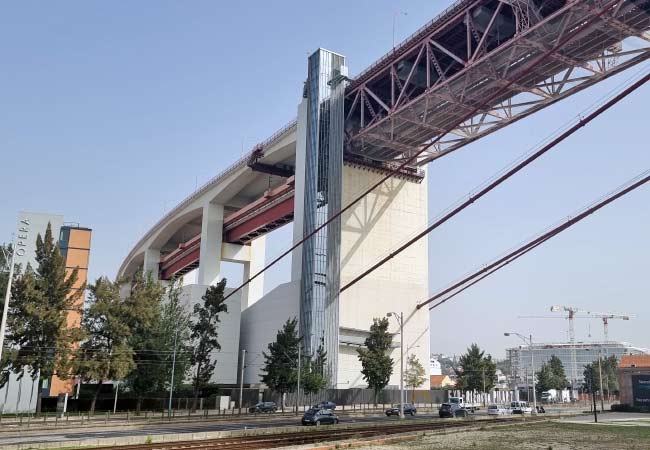
Pilar 7 details the construction of the Ponte 25 de Abril, with a viewing platform at the top of the bridge
Getting to Alcântara
The E15 tram is the sensible way to get here, though nowadays I use the convenience of Uber for all my travel within Lisbon.
The tram departs from Praça da Figueira in the Baixa district and stops at Praça do Comércio and Cais do Sodré station on its way west. Get off at the "Calvário" stop on the Largo do Calvário, from where it is a short 170m walk south to the entrance of Lx Factory.
A single ticket bought on board costs €3, but the far better option is the 24-hour unlimited public transport ticket at €7.25. The catch is that you can only buy it from a metro station ticket machine or office, so pick one up before you set out.
The E15 tram also continues on to Belém, and this is the best way to travel from Belém to Alcântara.
A word of warning from experience: the packed trams of Lisbon are a happy hunting ground for pickpockets, and they are very good at their work. Keep valuables out of sight and use the same common sense you would at home.
When heading to Alcântara from my flat in Graça, I always take an Uber for convenience and would expect to pay €5 to €6, much the same as from the Baixa district.
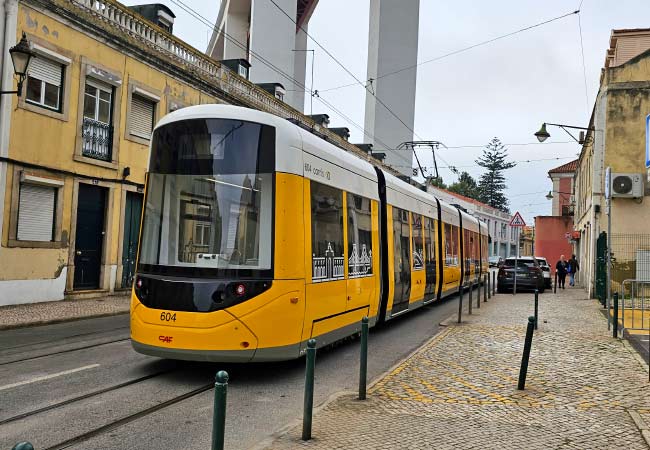
The E15 tram passing through Alcântara on a wet November day.
The transformation of Alcântara
When I first knew this part of the city, the valley was in a sorry state. Through the 1990s it was a wasteland of abandoned industrial units, blighted by drugs and prostitution. There was an edgy side to it, though. The crumbling warehouses and absence of neighbours made it the natural home for nightclubs and venues where few questions were asked.
The rehabilitation of the Docas waterfront in 1995 changed less than the city hoped, largely because the railway line cuts it off from the rest of the district. The real turning point came in 2007, when an abandoned factory near Alcântara-Terra station was converted into Lx Factory. The timing was perfect. Lisbon was beginning its great revival, rents in the valley were cheap, and creative people poured in. The years from 2015 to 2017 were the height of the artisan scene here, and the opening of Village Underground in 2014 only added to the energy.
Then the developers arrived. Rehabilitation slid into gentrification. Apartments aimed at Golden Visa investors went up, office blocks followed, and walls of urban art were painted over. Even Lx Factory itself was sold to French investors in 2017, and the shops have drifted towards tourists ever since.
I have mixed feelings about all of this, and I suspect you would too if you had watched it happen. For you as a visitor, the change is mostly good news: Alcântara today is clean, safe and full of things to see and do. But the urban cool that made it famous has moved on, to Beato and Marvila further east. If you are after the cutting-edge creative scene of Lisbon, I would suggest you visit 8 Marvila and Fábrica de Braço de Prata.
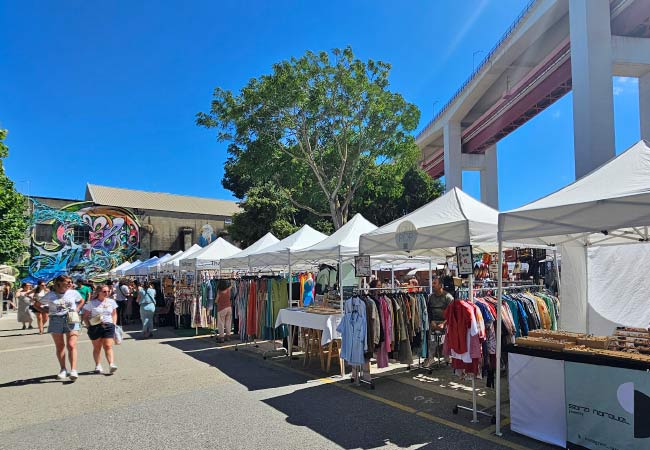
The craft market held every Sunday in Lx Factory
What does Alcântara mean?
The name is older than Portugal itself. As with many Portuguese place names beginning with "Al", it comes from Arabic: "al-qantara" means "the bridge", referring to the Roman bridge that once crossed the Alcântara river and valley, roughly where Alcântara-Terra station stands today. A district named for a bridge two thousand years ago now lives in the shadow of one of the largest suspension bridges in Europe. I rather like that.
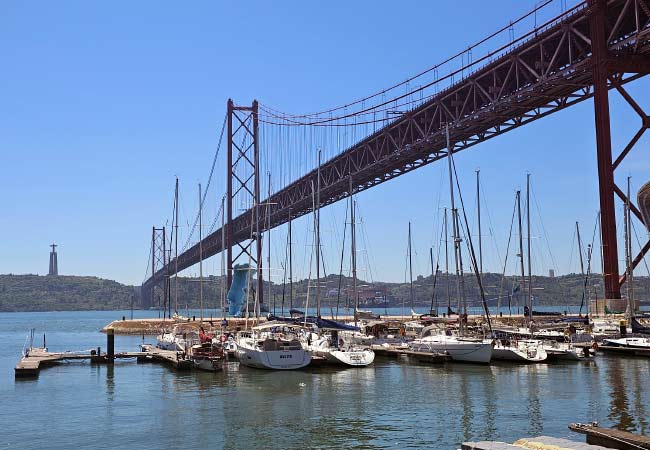
The Ponte 25 de Abril soaring high above Alcântara, its distinctive hum from the road heard throughout the district
Sights of Alcântara
LX Factory
This is the main attraction of the district, and the easiest place in Lisbon to lose an afternoon. The site began life in 1847 as the Companhia de Fiação e Tecidos Lisbonense, a textiles factory, and passed through various industrial uses, including a newspaper printing works, before being abandoned in the late 1990s. Its rebirth in 2007 as a creative hub kick-started the transformation of the whole district. Today it holds around a hundred small creative businesses within the multiple levels of the industrial building.
For your visit start with the bookshop, because everyone does, and rightly so. Ler Devagar, which translates as "read slowly", occupies the old printing hall. Books climb the walls from floor to ceiling, a bicycle and its rider hang suspended in mid-air, and the original printing press still dominates the upper level. The top floor hides Jazz Messengers, a second-hand vinyl shop with a couple of thousand jazz records.
Cerâmica Factory is the pick for Portuguese ceramics, and a far better souvenir stop than anything in the Baixa. More Than Wine does a carefully chosen range of Portuguese wines and food products. Organii sells organic cosmetics from a Portuguese family business. Treat these as starting points rather than a checklist. The pleasure of Lx Factory is poking your head through doorways.
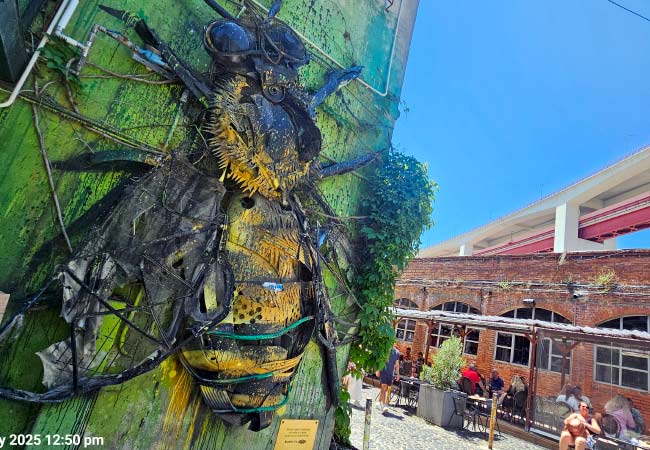
The art is everywhere at Lx Factory, painted across walls, stairwells and the gaps between buildings. The piece to seek out is near the entrance: a giant bee assembled from scrap and rubbish by Bordalo II, one of the most celebrated street artists in Portugal.
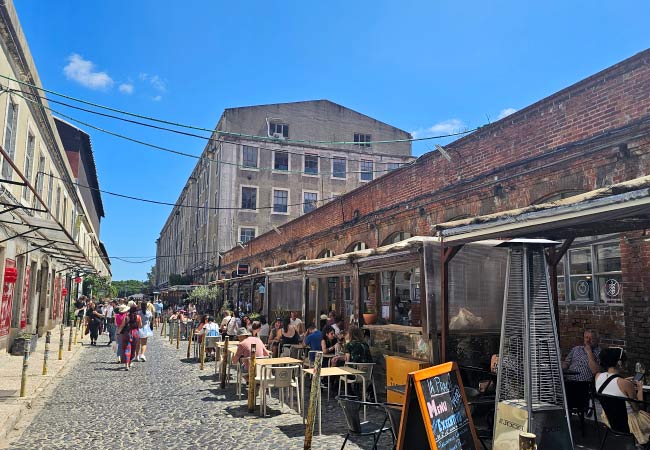
To discover the many creative stores of Lx Factory, explore the upper levels of the main building, the grey building to the rear of this image
The Museu da Carris
The Museu da Carris details the history of public transport in Lisbon, with a focus on the trams, as the museum is based in the old tram depot. Carris has been the public transport company of Lisbon since 1872, and the range of vehicles on show includes horse-drawn trams, funiculars, early 20th-century electric trams and more recent models. The first section exhibits historical documentation and pictures (and is only for real enthusiasts), while the second section, which is reached via a 1901 tram, displays many colourful and classic trams. museu.carris.pt/
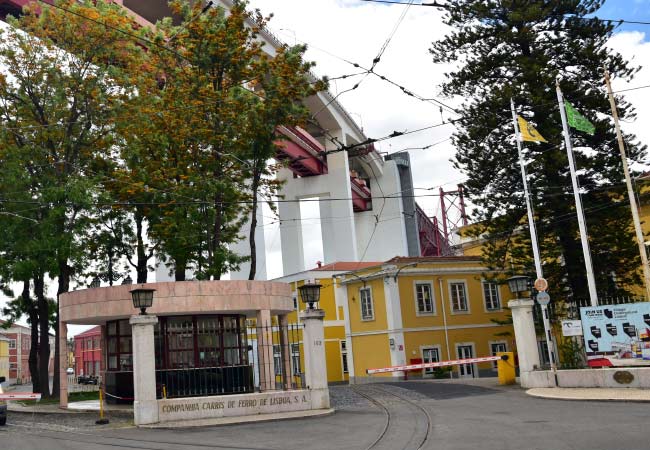
Museu do Oriente
A superb museum dedicated to the art and culture of East Asia, told through the long history of Portuguese presence there. The collection runs to more than 1,640 artefacts from China, Japan and India, displayed in a converted dockside warehouse. Set aside a couple of hours if Asian art and history interest you at all.
Experiência Pilar 7
The Ponte 25 de Abril dominates every view in Alcântara, and Pilar 7 lets you climb inside it. The museum tells the story of the bridge's construction, but the real draw is the viewpoint at the top. The sensation of standing at that height, with the Tejo below and the trains rumbling through the deck beneath your feet, will counter the 400+ step to the top. If you have a head for heights and are fit, this is one of the most memorable viewpoints in Lisbon.
Capela de Santo Amaro
My favourite spot in the district, especially after spending time in Lx Factory, Belém or any other place overrun with visitors. This small, round chapel sits on the hillside above the valley, and almost nobody makes the ten-minute climb to reach it. Inside are beautiful 17th-century tile paintings; outside, the terrace provides a fine view of the Ponte 25 de Abril. The viewpoint is not the greatest, but the real appeal for me is that no one else will be here. There are many more famous viewpoints in Lisbon, but at most you’ll be competing with other tourists for the perfect spot for a photo. Not at the Capela de Santo Amaro. This is a quiet place.
MAAT
Strictly speaking the MAAT, the Museum of Art, Architecture and Technology, sits at the Belém end of the riverfront, but it belongs in any walk between the two districts. Even if contemporary art is not your subject, go for the building. Its sweeping white roof doubles as a public viewpoint, and from the top the river, the bridge and the whole of Alcântara open out in front of you. The old power station beside it is a striking piece of industrial history in its own right.
Tapada das Necessidades and the Palácio
On the eastern side of the valley, technically within Estrela but an easy walk from Alcântara, you will find the Tapada das Necessidades, a walled park that remains one of the most peaceful green spaces in Lisbon. The grand pink Palácio das Necessidades beside it now houses the Portuguese foreign ministry, so you cannot go inside, but the Largo das Necessidades in front of it is a lovely spot to pause, and the park behind rarely holds more than a handful of people. When central Lisbon becomes too much, this is where I come.
Discover more of Lisbon with our most popular guides


About this guide: I'm Philip Giddings. I live in Graça with my Portuguese wife Carla, whose family are Lisboetas going back generations. I've been visiting Portugal since 2001, writing the independent guides at LisbonLisboaPortugal.com since 2009, and the site is now my full-time work. Carla first brought me up to Lisbon on an early trip, and twenty-five years on we are still walking the city together: summers on the packed beaches, quiet Saturdays at the Feira da Ladra, and hunting for a heater for our flat when the chilly winter arrives.
This site has 189 guides on Lisbon. It takes no payment from tourist boards, tour operators, or attractions for inclusion, and is funded by affiliate commissions on tour bookings, disclosed on every page that contains them. Every practical detail (ticket prices, opening hours, bus routes, time-slot policies) is checked against the official sources and verified in person on the walks I make through the city each week. Read the full story here.