LisbonLisboaPortugal.com
The best independent guide to Lisbon
LisbonLisboaPortugal.com
The best independent guide to Lisbon
3 days in Lisbon: a suggested itinerary for 2026
Give Lisbon 3 days. It is the ideal length of stay, and what you should choose. In these seventy-two hours you can ride the No. 28 tram up to the castle, eat a custard tart still warm from the oven of a bakery that has not changed its recipe since 1837, and end the night at a rooftop bar socialising with new friends.
A city this varied does not give itself up in a rushed weekend, and three days is the honest minimum. It gives you time to walk the grand plazas of Baixa in the morning and lose yourself in the medieval alleys of Alfama by afternoon. Time to take the tram out to Belém and stand in front of the Jerónimos Monastery without one eye on your watch. Time, on the third day, to choose between the boutiques and tiled houses of Príncipe Real, the glass and steel waterfront of Parque das Nações, or a day trip out to Sintra. Lisbon is a city of distinct neighbourhoods, each with its own pace and character, and the itinerary that follows is built around that.
I have been exploring Portugal since 2001, and for the past five years my Portuguese wife and I have made Lisbon our home. This guide draws on those years of wandering the city, eating in its tascas, and steering visiting friends through it, to help you plan three days that feel unhurried and true to the Lisbon we have come to know.
An overview of the three-day itinerary
This itinerary works through Lisbon one neighbourhood at a time, each day shaped around a distinct part of the city. This is the route I take friends and family on when they visit Lisbon for the first time:
• Day 1, morning: Baixa. The grand plazas, and pedestrian boulevards of Lisbon's elegant historic heart.
• Day 1, afternoon: Alfama. A climb through the medieval alleys to the ramparts of the Castelo de São Jorge.
• Day 1, evening: Sunset from the water on a Tagus river cruise
• Day 2, morning and early afternoon: Belém. The maritime monuments of Portugal's Age of Discovery, and a custard tart from the original bakery.
• Day 2, late afternoon: LX Factory. The creative hub of Alcântara, beneath the great arches of the Ponte 25 de Abril
• Day 2, evening: Sunset from a hilltop miradouro viewpoint, my favourites being Graça near the castle or Adamastor overlooking the river.
• Day 3, morning: Príncipe Real. A ride on the quieter No. 24 tram, the leafy gardens of the district, and a walk down the grand Avenida da Liberdade.
• Day 3, afternoon: Parque das Nações. The modern waterfront of the Expo '98 site, with its bold architecture and world-class Oceanário.
• Day 3, afternoon (alternative): A ferry across the Tagus to Cacilhas, then up to the Cristo Rei statue for the finest view back across the city.
• Friday or Saturday night: Bairro Alto and Cais do Sodré. The nightlife districts, from hillside bars spilling into the streets to the clubs of Pink Street.
Three days is enough to see Lisbon well, but it is not enough to see the region around it. The coast, the palaces of Sintra, and the wine country of the Setúbal Peninsula all sit within an hour of the city, and any one of them is reason enough to stretch a three-day stay into a week.
The interactive map below plots the full three-day route. Day one is marked in green, day two in yellow, and day three in blue. Zoom out to see all of the points.
Day 1: 1) Praça do Comércio 2) Rua Augusta 3) Elevador de Santa Justa 4) Rossio 5) Praça dos Restauradores 6) Igreja de Santo António 7) Sé Cathedral 8) Castelo de São Jorge 9) Portas do Sol viewpoint 10) Panteão Nacional
Day 2: 11) Mosteiro dos Jerónimos 12) Padrão dos Descobrimentos 13) Torre de Belém 14) Pastéis de Belém 15) LX Factory
Day 3: 16) Praça Luís de Camões 17) Convento do Carmo 18) Igreja de São Roque 19) Jardim do Príncipe Real 20) Avenida da Liberdade 21) Praça Marquês de Pombal 22) Parque das Nações 23) Oceanário de Lisboa 24) Torre Vasco da Gama
Nightlife: 25) Pink Street (Cais do Sodré) 26) Bairro Alto
Most friends who come to Lisbon for a long weekend ask me about Sintra. They have seen the photographs of the Pena Palace on social media, and they want to go. If you do too, I would use day three of this itinerary for the trip. My full guide to a day trip to Sintra can be read here.
In high summer, when the city heat builds in the afternoons, you may prefer to escape to the coast. I would point you towards the beaches along the Cascais and Caparica coasts, all of which are reachable by train or bus within forty minutes. My guide to Lisbon's best beaches is here.
I would never recommend hiring a car for a three-day trip to Lisbon, due to the traffic and lack of parking spaces. The public transport, by contrast, is excellent, and where it does not reach, Uber and Bolt fill the gaps cheaply and reliably. In five years of living here, I have not once missed having a car within the city.
The rest of this guide walks through the three days in depth.
Day 1: the historic heart of Baixa and Alfama
The first day belongs to the two districts that form Lisbon's historic heart, and the contrast between them is the whole point. Baixa is the grand, orderly Lisbon of plazas, arches, and pedestrian boulevards. Alfama is the old Moorish quarter that the great earthquake spared, a tangle of medieval alleys climbing the hill to the castle. Morning for one, afternoon for the other.
Morning in Baixa
Baixa is the elegant, formal face of Lisbon, and to my mind the only sensible place to begin a trip to the city. The grid of neoclassical streets and arcaded plazas was laid out in the years after the 1755 earthquake levelled the medieval city, and it remains one of the finest pieces of Enlightenment town planning in Europe.
The great set piece is the Praça do Comércio, a vast riverside square opening onto the Tagus, framed on three sides by long yellow arcades and on the fourth by the water itself. For three centuries this was the commercial gateway to the Portuguese empire, and to me it still feels like the entrance to Lisbon. At its northern end stands the Arco da Rua Augusta, a triumphal arch with a viewing platform looking out over the Tagus estuary.
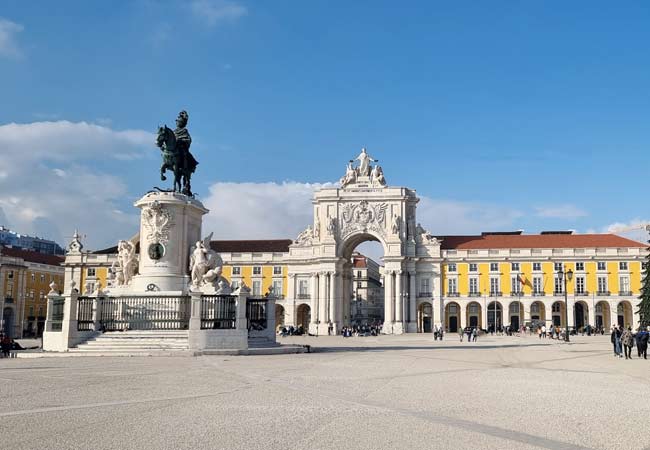
The magnificent Praça do Comércio plaza
Beyond the arch runs Rua Augusta, the main pedestrian artery of Baixa. It has a reputation for being relentlessly touristy, and the reputation is fair, but I still walk it happily, stopping to watch the street performers and have a midmorning pastel de nata at Manteigaria. In autumn the street smells of roasted chestnuts, sold from smoking carts on almost every corner.
Five minutes up Rua Augusta stands the Elevador de Santa Justa, a wrought-iron lift built in 1902 by a student of Gustave Eiffel. It connects lower Baixa to the Carmo district up the hill, and the platform at the top opens onto one of the better views in Baixa. The queue to ride it up regularly runs over an hour, and the same viewing platform can be reached for free in ten minutes by walking up the hill to the Convento do Carmo and crossing the walkway from the top. In my opinion the Elevador de Santa Justa is the most overrated sight in Lisbon, and I tell every friend who visits to give it a miss.
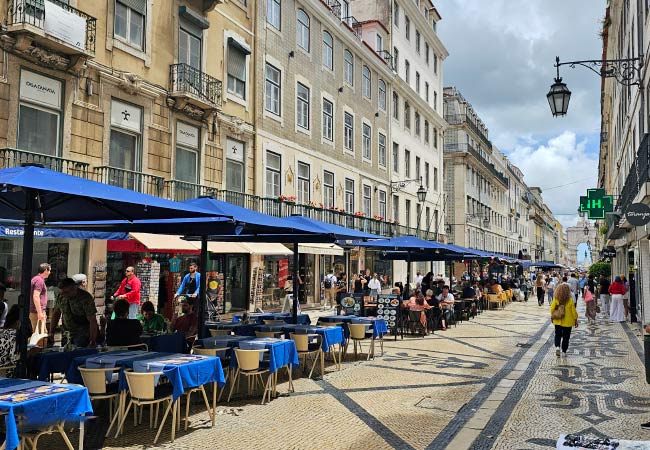
The Rua Augusta looking down to the Arco da Rua Augusta
At the far end of Rua Augusta lies Rossio, the social heart of Lisbon for the best part of seven hundred years. The square is paved in the famous black-and-white calçada portuguesa, laid in waving patterns, beautiful to look at but deadly slippy after rain! Between two baroque fountains and a bronze column to King Pedro IV, it is one of the finest places in the city to take an outdoor table, order a coffee, and watch Lisbon move past you. My favourite coffee shop is the Confeitaria Nacional just on the edge of the Praça da Figueira, which sells some of the best pastries in Baixa and keeps its real charm tucked away in the upstairs rooms.
To finish the morning, step into A Ginjinha, the tiny, century-old bar tucked into a corner of Rossio that serves nothing but ginjinha, the sweet cherry liqueur Lisbon has been drinking since 1840. The same owner has been pouring it across the counter since I first walked in back in 2001. The order is a single shot, and you will be asked com ou sem elas?, with or without the cherries. Always say with. It is the only way to drink it.
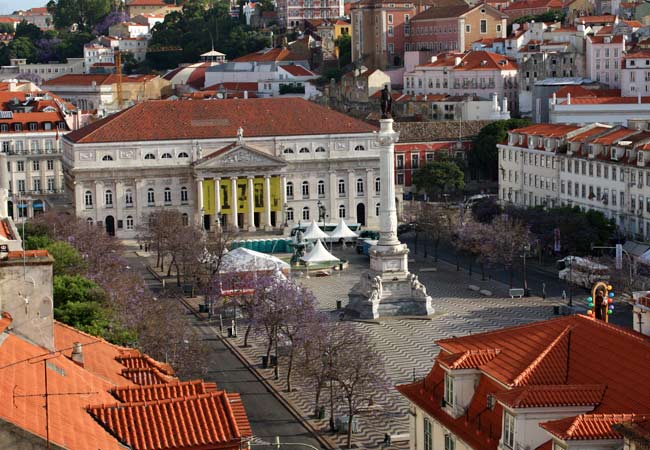
Rossio plaza, as seen from the top of the Elevador de Santa Justa
Afternoon in Alfama
If Baixa is the formal Lisbon of grand plazas, Alfama is its older, wilder twin. The neighbourhood predates the rest of the city by centuries, a Moorish quarter that the 1755 earthquake somehow spared, and it has the layout to prove it. Steep cobbled alleys that double back on themselves. Hidden courtyards behind unmarked doors. Whitewashed houses stacked in colourful tiers between the river and the castle on the hill.
After five years of living in Lisbon I still find new corners of it, and the small pleasures are the same ones that drew me here. Fado music drifting out of a half-open door. Grilled sardines on a charcoal burner outside a family restaurant. Washing hanging from wrought-iron balconies three floors up.
The district does not need a set plan. You walk, you climb, you take the alley that looks most interesting. At the foot of the hill stands the Sé Cathedral, the oldest church in Lisbon and the most fortress-like of any cathedral in Portugal, built in the 12th century on the site of the old mosque. The famous yellow No. 28 tram rattles through the main thoroughfares, and is worth a ride for its own sake, but Alfama's best corners are the ones the tram cannot reach.
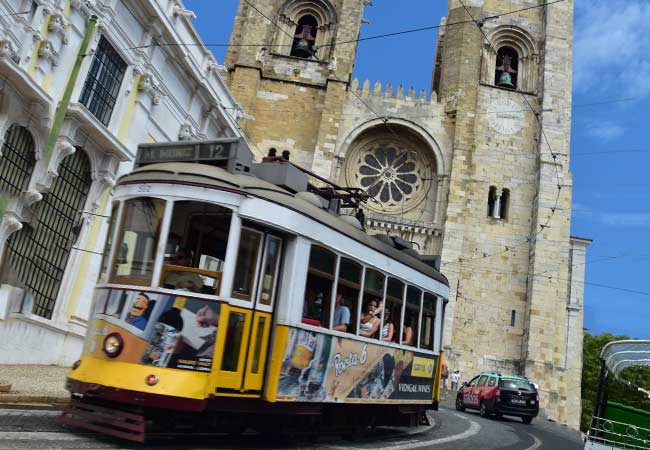
The number 28 tram passes the Sé Cathedral
The climb is broken by miradouros, the hilltop viewpoints that Lisbon does better than any city I know. The Miradouro das Portas do Sol is the famous one: a wide terrace that hangs above Alfama's red-tiled roofs with the river spread out behind them. The Miradouro de Santa Luzia sits a minute below it, smaller, tiled in azulejos, and on a quiet morning the better of the two.
At the summit of the hill sits the Castelo de São Jorge, the Moorish citadel that has kept watch over Lisbon for a thousand years. The views from the ramparts are the finest in the city. The queues to enter can be long in high season, but the plaza outside the gates costs nothing and the peacocks strut across the cobbles as if they own the place.
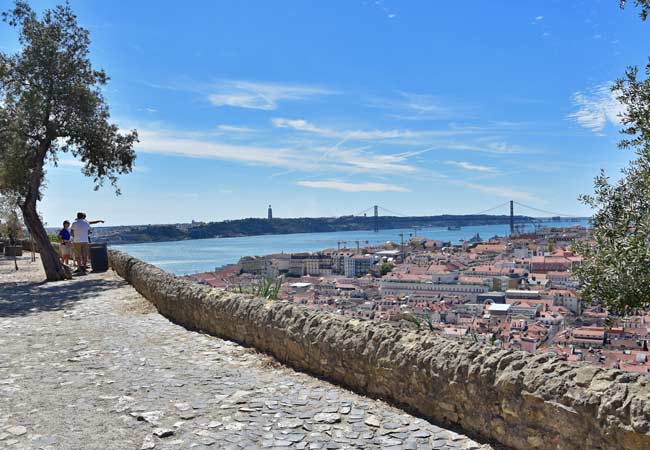
The battlements of the Castelo de São Jorge provide wonderful views over the Tejo Estuary
Continuing on to Graça
Beyond the castle the hill keeps climbing into Graça, the neighbourhood my wife and I chose as home when we moved to Lisbon. Graça is where the city still feels lived-in. The main street is a working high street of cafés, bakeries, and old grocery shops, and the restaurants up here cook for the people who live on the street, not for the people passing through it. O Pitéu da Graça and Sant'Avó are the two I send friends to, both family-run, both serving the kind of Portuguese cooking that the tourist restaurants in Alfama have long since stopped bothering with.
Graça holds the two finest viewpoints in the city as well. The Miradouro da Graça, set under a canopy of pines, is where I watch the sun set whenever I can. The Miradouro da Senhora do Monte, a few minutes further up, is the highest point in Lisbon and the place to see the whole city laid out below you. At the heart of the district the narrow Travessa do Monte is lined with small bars, and to my mind there is no better end to a first day in Lisbon.
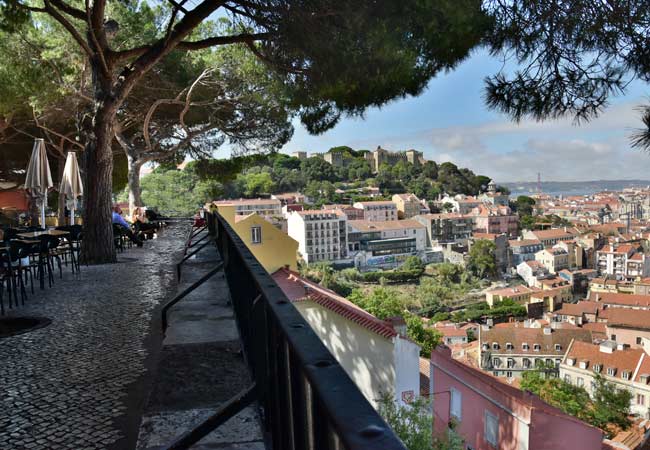
The Miradouro da Graça viewpoint, my favourite point of the city which overlooks the castle and the Baixa district
Evening: sunset on the Tagus
Lisbon is a seafaring city, built on the edge of the Atlantic, and much of its golden age was forged through exploration and trade. To my mind, there is no finer way to close the first day than from the deck of a sunset boat tour, watching the city slide by shared with a loved one, friends or family beside you.
A typical sunset boat tours runs about two hours and takes in the headline sights. You will glide past the Torre de Belém and the Padrão dos Descobrimentos, slip beneath the Ponte 25 de Abril, and pass under the gaze of the Cristo Rei statue on the southern bank.
The option of boats runs the full spectrum, from traditional Portuguese vessels through to thumping party boats. A classic sailing yacht is the most popular option, but you will find departures from Belém, Cais do Sodré and Doca de Alcântara.
For any sunset tour I have two pieces of advice. First, book ahead, particularly in spring and summer, as the good boats sell out days in advance. Second, take a layer. Once the sun drops behind the horizon the air turns sharply colder, and on one June tour I ended up retreating inside, shivering in just a t-shirt.
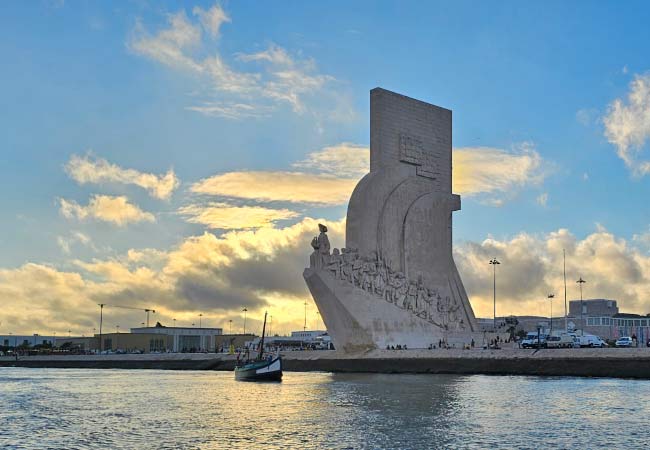
The sun setting behind the Padrão dos Descobrimentos monument
Day 2: the maritime monuments of Belém
The second day takes you west to Belém, the riverside district from which Portugal's great explorers set sail in the 15th and 16th centuries. It is a different Lisbon out here. Where Alfama climbs and tangles, Belém spreads out, monumental and open, built on a scale that matches the ambitions of the men who left from its docks.
The easiest way to reach it is the No. 15 tram from Praça da Figueira or Cais do Sodré, a thirty-minute ride along the river. In truth I almost always take an Uber. The fare is around six euros and it saves half an hour.
Mosteiro dos Jerónimos
The centrepiece is the Mosteiro dos Jerónimos and it deserves every minute you give it. Construction began in 1501, funded by a five percent tax on the spice trade that Vasco da Gama's voyage to India had just made possible. The result is the finest example of Manueline architecture in Portugal, a style unique to this country that fuses Gothic structure with carvings of ropes, anchors, coral, and the strange marine forms the explorers were bringing home in their sketchbooks. The cloister is the masterpiece, two storeys of stone lacework, every column carved differently.
The one issue I always have visiting with friends is the queues, which stand in the full sun with no shade. When my brother came over with his kids last summer we skipped the cloister entirely and just visited the church, which is free to enter and holds the part most people come for anyway. Vasco da Gama is buried just inside the door, his tomb facing that of the poet Luís de Camões on the opposite side. Sailors prayed here before their voyages. Many of them never came back.
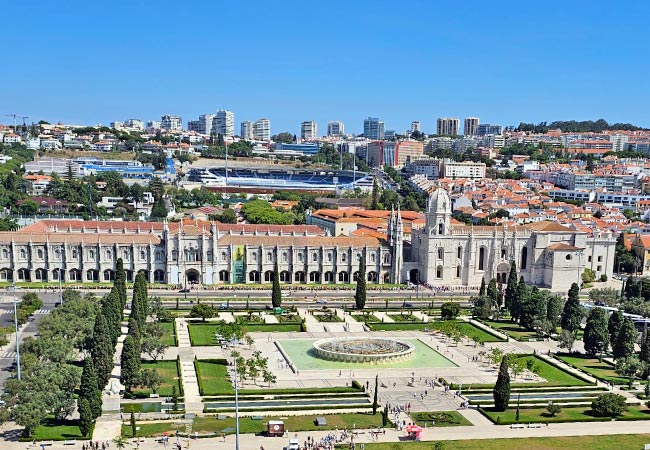
The Mosteiro dos Jerónimos
The waterfront monuments
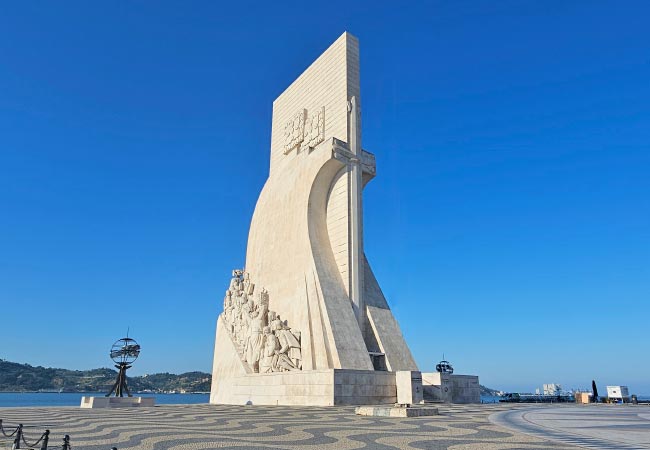
From the monastery it is a five-minute walk through the gardens to the river, where two monuments wait on the waterfront. The Padrão dos Descobrimentos, a great limestone prow thrust out over the Tagus, was built in 1960 to mark five centuries since the death of Henry the Navigator. Thirty-three figures from the Age of Discovery stand along its flanks, with Henry himself at the bow.
Ten minutes further along the riverside promenade stands the Torre de Belém, and this is the one I would not miss. Built between 1514 and 1519 as both a ceremonial gateway and a defensive fort guarding the mouth of the Tagus, it sits out in the water on its own small platform, all turrets and balconies and Moorish loggias. It is smaller than the photographs suggest, which is part of its charm.
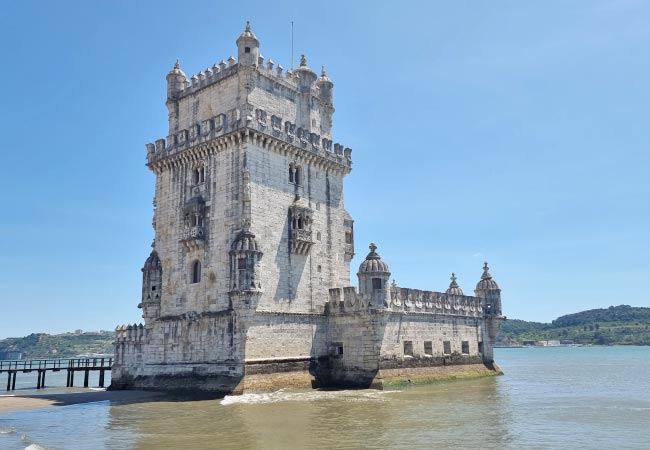
The Torre de Belém
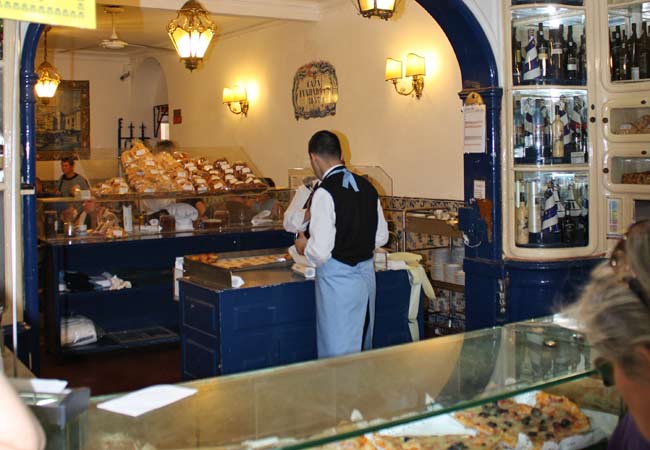
Pastéis de Belém
Tourists come to Belém for the sights, I come here for the Pastéis de Belém. This bakery has been baking the original custard tart since 1837, from a recipe said to be known to only three pastry chefs at any one time, working behind a locked door at the back of the bakery.
Sadly its fame means it is always busy, but the interior is deceptively large, a warren of tiled rooms that sprawls back further than you would guess from the street, and the queue for a table moves quickly. Once seated order two Pastéis de Belém, warm from the oven, with cinnamon and icing sugar shaken over the top. Every other pastel de nata in Lisbon, however good, is a copy of these.
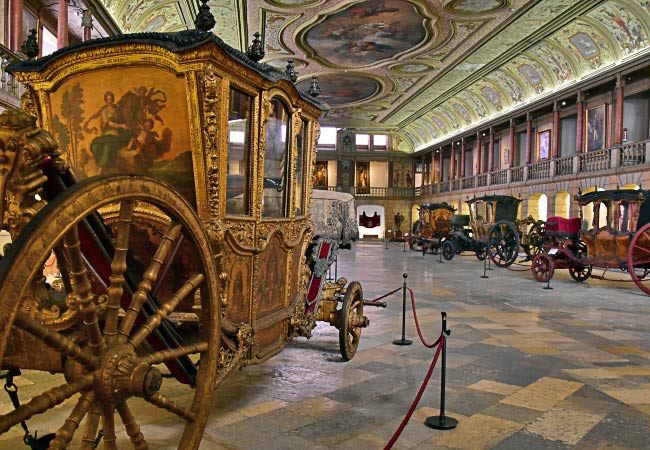
If you have time for more
Belém holds three of the finest museums in Lisbon, and any one of them is worth an hour of your afternoon. The Museu Nacional dos Coches has one of the world's great collections of royal carriages, gilded baroque coaches built for kings who travelled across Europe in them. Along the river, the MAAT sits in a long, low, white wave of a building, hosting some of the more interesting contemporary art shows in the city. For modern art proper, the Coleção Berardo is the address, with works by Picasso, Warhol and Dalí in its collection.
Late afternoon: LX Factory
From Belém it is a fifteen-minute tram ride, or a five-euro Uber, to Alcântara and LX Factory. The site sits directly beneath the Ponte 25 de Abril, close enough that you can hear the constant hum of traffic crossing the bridge above you.
LX Factory is unlike anywhere else you will have seen in Lisbon so far. It is the creative centre of the city, full of concept shops, artists' studios, and small independent venues. On a sunny afternoon there is no better place to wander, browse the galleries, and stop for food or a drink.
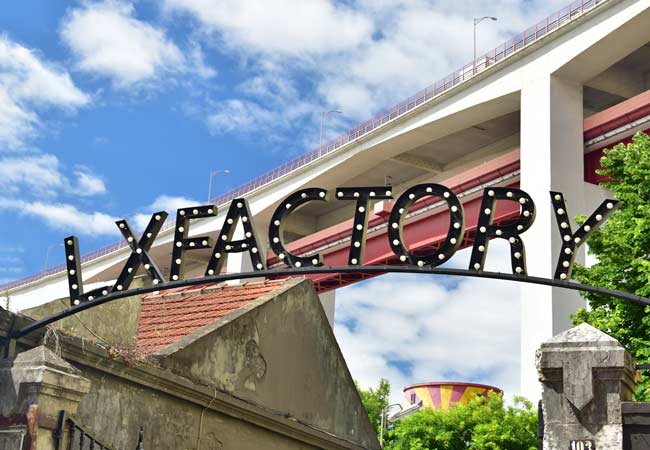
The Lxfactory stands in the shadow of the Ponte 25 de Abril bridge
The complex began life in 1846 as a textile and printing works, and for over a century it produced everything from fabrics to the country's national newspapers. By the early 2000s it stood empty. The reopening in 2008, as a warren of studios, shops, restaurants and bars, has turned it into the most successful piece of industrial regeneration in the city. The old machinery is still there in places. So are the cobbled alleys between the buildings, the iron walkways, and the painted shutters covered in some of the best street art in Lisbon.
My highlight is Ler Devagar, a bookshop spread across two storeys of an old printing hall, with floor-to-ceiling shelves and a winged bicycle suspended from the ceiling. Rio Maravilha sits on top of one of the old factory buildings, with a terrace looking straight out at the bridge and the Cristo Rei statue across the water. If you are here on a Sunday, an open-air craft market runs along the main alley.
A word of honesty. LX Factory has gradually lost some of its creative edge in recent years, with rents rising and tourists now greatly outnumbering the artists and makers who first gave it life. The new artisan scene of the city has shifted east to Marvila, with 8 Marvila at its heart. If you enjoy the cut edge creative scene, this is where I would point you.
Evening: Bairro Alto and Cais do Sodré (Thursday to Saturday)
Lisbon's nightlife begins in Bairro Alto, the grid of narrow streets that climbs the hill west of Chiado. By day it is one of the quieter residential pockets of the centre, with washing strung between the windows. By night it becomes something else entirely. Dozens of small bars, most of them no bigger than a front room, throw their doors open from around ten in the evening, and the drinking spills out into the cobbled streets. There is no cover charge, no queues, no dress code.
This is the part of Lisbon nightlife I still enjoy most after five years here. Not because the bars themselves are remarkable, most are functional at best, but because of what happens in the streets between them. By midnight on a Friday you will be sharing a kerb with a group of Erasmus students from Bologna, a couple of off-duty chefs from a Michelin restaurant in Chiado, and a stag party from Manchester who have somehow ended up at the same bar as you. It is unpretentious, relatively cheap, and entirely outdoors.
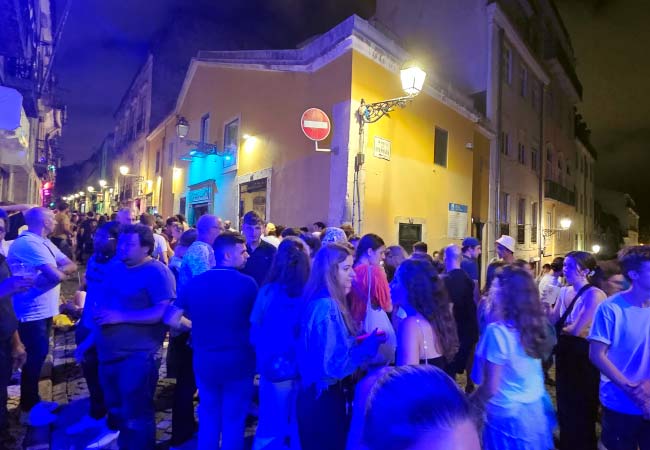
The socialising spills into the streets on a Friday night in Bairro Alto
Cais do Sodré and Pink Street
By two in the morning the bars shut and the crowd moves downhill to Cais do Sodré. The district was once the city's red-light quarter, and when I first visited twenty-five years ago it was one of the dodgiest corners of the city. Today it has been redrawn as Lisbon's late-night hub.
I will be honest with you. I think Pink Street is overrated. The bars are expensive by Lisbon standards, the music is generic, and the street is increasingly given over to stag and hen parties bussed in from the airport. That said, after an evening of drinking it can be fun. My favourite bar is Pensão Amor, set inside a former brothel, with an interior that mixes 1970s velvet and early twentieth-century gilt.
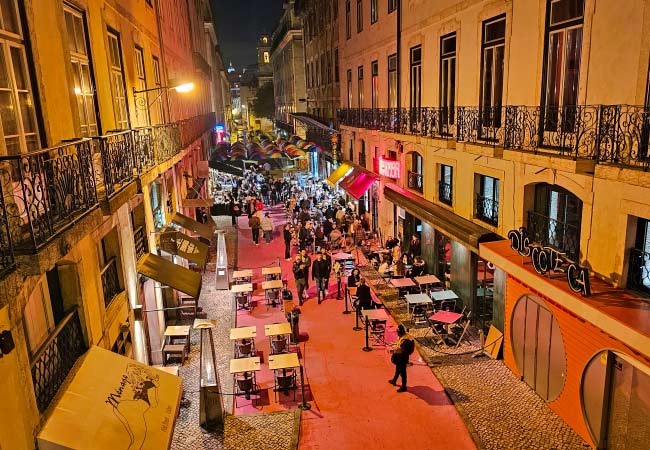
Pink Street
Day 3: Bairro Alto, Príncipe Real, and the Avenida da Liberdade
The third day takes you through a quieter, more elegant Lisbon. After two days in the historic core and the monumental waterfront, this is the city as Lisboetas themselves live in it: residential, refined, and lived in.
Bairro Alto by day
Bairro Alto is two neighbourhoods in one. By night it is the centre of Lisbon's nightlife, as covered above. By day it is something almost opposite: a quiet residential grid of narrow streets, where the bars are shuttered and washing hangs from the balconies.
The district holds two of the most striking churches in Lisbon, and they could not be less alike. The Convento do Carmo stands as a roofless Gothic shell, its nave open to the sky since the 1755 earthquake brought the vaulting down. It is also where the 1974 Carnation Revolution ended, with the dictator surrendering from the barracks next door
A few streets away, the Igreja de São Roque looks like nothing from the outside. Step inside and you will be looking at one of the most lavishly decorated church interiors in Europe. The Chapel of Saint John the Baptist was built in Rome in the 1740s, blessed by the Pope, dismantled, shipped to Lisbon in three boats, and reassembled here, using lapis lazuli, amethyst, ivory, and several tonnes of gold and silver. At the time it was said to be the most expensive chapel ever built.
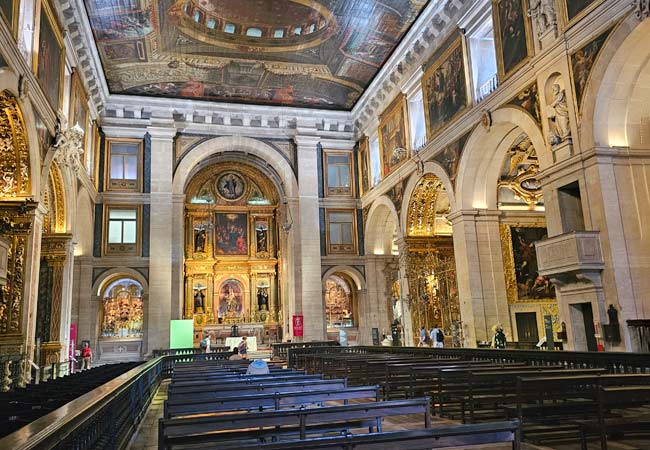
Príncipe Real
Five minutes north of Bairro Alto, Príncipe Real is the most quietly affluent of the central neighbourhoods, and the one I would live in if Graça ever stopped suiting me. It is a district of nineteenth-century mansions, antique dealers, and small Portuguese fashion labels. The atmosphere is bohemian and slow. There is no headline sight here, and that is the point.
The heart of the district is the Jardim do Príncipe Real, a small park built around a single enormous Lebanese cedar planted in 1878, its branches trained outward on a metal frame to form a flat green canopy almost twenty metres across. I love the kiosk in the park, sitting under the shade of the tree with the gentle sounds of the city around me.
The standout building in the district is the Embaixada, a Moorish-revival palace from the 1870s that has been turned into a concept store. Around twenty independent Portuguese designers occupy what used to be the bedrooms and reception rooms, and the building itself is a delight, all tiled courtyards and stained-glass ceilings.
On the district's eastern edge, the Miradouro de São Pedro de Alcântara is the obvious place to end a morning here. The two-tiered terrace looks straight across the valley to the Castelo de São Jorge on the opposite hill.
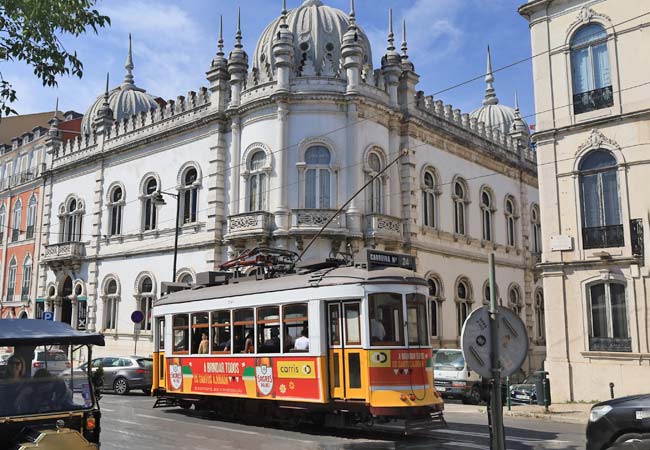
The Embaixada boutique shopping centre, in the Príncipe Real district, is housed in a former palace
The Avenida da Liberdade
East of Príncipe Real, the ground falls away towards the Avenida da Liberdade, Lisbon's grand nineteenth-century boulevard. The avenue was laid out in 1879, ninety metres wide, planted with limes and jacarandas, and today is lined with the flagship stores of Louis Vuitton, Prada, Gucci, and the rest of the international luxury circuit. This is high-end shopping.
The avenue itself is a fine walk, and it is the natural seam between the old city and the new. At its foot stands the Praça Marquês de Pombal, the great roundabout circling a monument to the man who rebuilt Lisbon after the 1755 earthquake. Behind it rise the sloping lawns of Parque Eduardo VII, named for the British king who visited the city in 1903, and from the top of the park there is one last view back down the avenue and across the river.
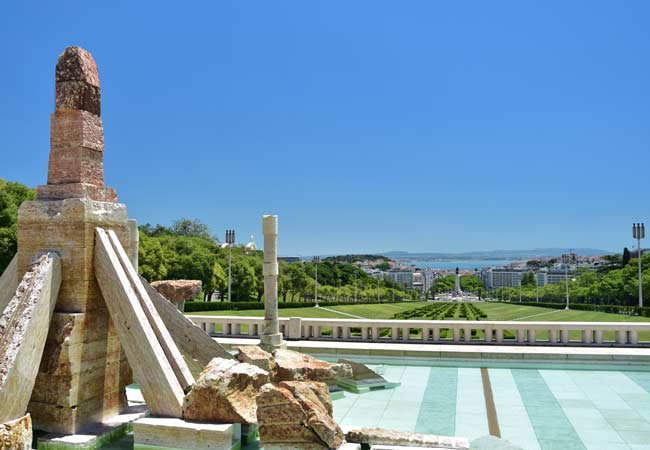
Looking down to the Praça Marques Pombal from the Miradouro do Parque Eduardo VII viewpoint
Afternoon: Parque das Nações
The final afternoon takes you to the opposite end of the city, both geographically and in character. Parque das Nações sits on the eastern waterfront, and it is the part of Lisbon that looks least like Lisbon. There are no cobbled alleys here, no tiled facades. Instead you have wide riverside promenades, glass towers, public sculpture, and the kind of planned civic space that European cities produced in confident bursts at the end of the twentieth century.
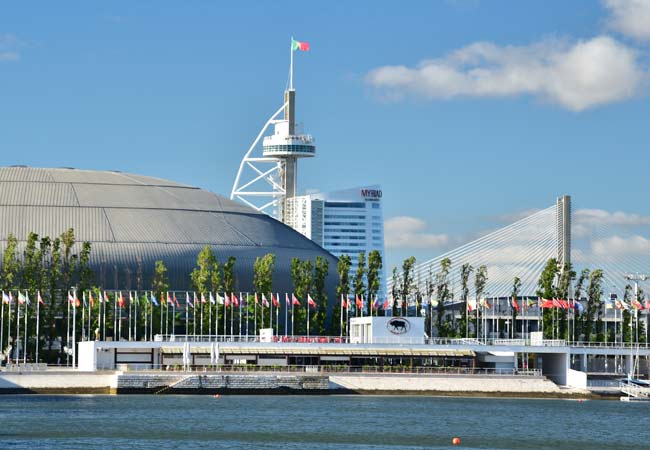
The district owes its existence to Expo '98, the World's Fair that Lisbon hosted on the five-hundredth anniversary of Vasco da Gama's voyage to India. The theme was "The Oceans: A Heritage for the Future". The site, until then a stretch of oil refineries and scrapyards, was cleared and rebuilt from scratch in under five years, leaving Lisbon with a new neighbourhood and a set of architectural landmarks that have aged better than most Expo legacies.
The headline attraction is the Oceanário de Lisboa, and it deserves the billing. It is built around a single vast central tank of five million litres of seawater, with four large habitat tanks arranged around it representing the Atlantic, Pacific, Indian, and Antarctic oceans. It is widely rated among the finest aquariums in Europe, and I would tell any visitor not to miss it, particularly if you are travelling with children. I have taken my nieces and nephews here more than once, and they have loved it every time.
The Vasco da Gama Bridge runs east from the district across the Tagus, and at twelve and a half kilometres it is one of the longest bridges in Europe. The Torre Vasco da Gama, a one-hundred-and-forty-five-metre sail-shaped tower at the northern end of the site, is now part of a hotel and closes the skyline. Between the two, the Teleférico cable car runs for about a kilometre along the waterfront, and on a clear afternoon the ride is a good way to take in the scale of the place.
A word of honesty about the district. Some visitors love it for the space, the river, and the change of pace from the old city. Others find it polished but soulless. If you are looking for more of the old Lisbon, I would suggest Cacilhas, detailed below, instead.
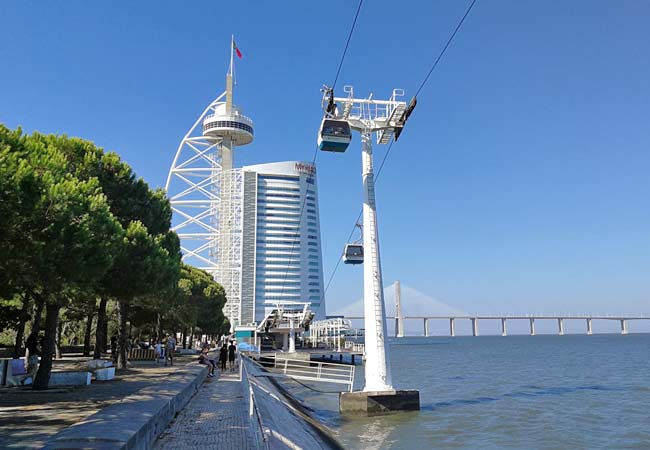
The Torre Vasco da Gama and waterfront of the Parque das Nações
Alternative afternoon: Cacilhas and the south bank
If Parque das Nações is the modern Lisbon, Cacilhas is the working one. The town sits on the south bank of the Tagus, directly opposite the city, and for most of the twentieth century it was a shipyard town. The yards closed in the 2000s, but the character of the place has lingered: low buildings, a working ferry terminal, and a riverside strip of seafood restaurants that locals have been crossing the water for since long before any tourist had heard of them.
The ferry ride is part of the experience. Boats depart from Cais do Sodré every ten minutes or so, the journey takes about ten minutes, and the views back across the water of the bridge and the Lisbon waterfront are among the finest of the trip. These are working commuter ferries, not tourist boats, and the fare is priced accordingly.
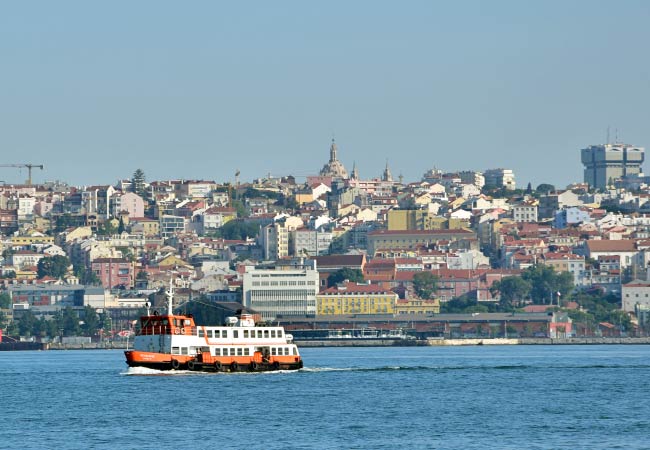
Cacilhas itself is small and easily walked. The main reason locals come here is to eat. The streets running south from the ferry terminal are lined with seafood restaurants where the prices are a third of what they are across the water and the fish was landed that morning. Cova Funda and A Toca on the Rua Cândido dos Reis, are the two I would point a visitor towards, both serving the kind of straightforward Portuguese seafood that the tourist restaurants in Lisbon have stopped bothering with.
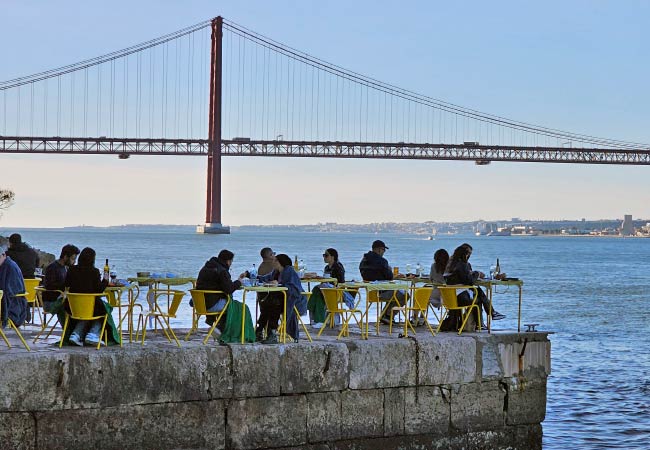
For something more polished and built for social media, Ponto Final sits a little further along the waterfront, its tables set on a narrow stone pier directly on the river with the Lisbon skyline as the backdrop.
Up to the Cristo Rei
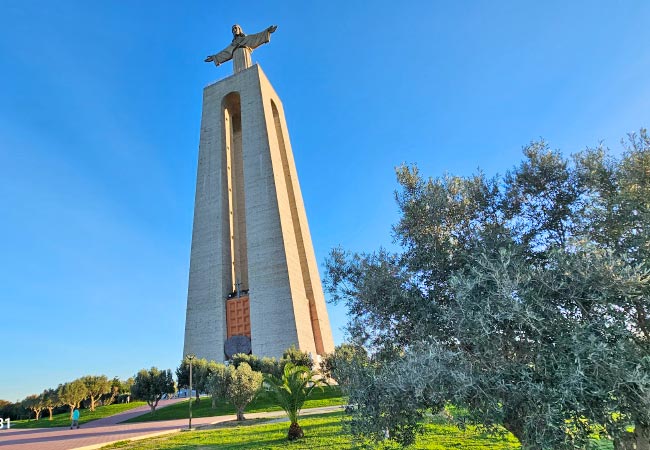
A short ride on the 3001 bus up the cliff behind Cacilhas brings you to the Santuário do Cristo Rei, the great concrete statue of Christ with arms outstretched that stares back across the river at the city. It was inaugurated in 1959, modelled on the Christ the Redeemer in Rio de Janeiro, and built in thanks for Portugal having been spared the destruction of the Second World War.
The view from here is, in my opinion, the single finest view of Lisbon there is. The city unfolds across the water, the Ponte 25 de Abrilsweeping out from beneath you, and the whole estuary opens west towards the Atlantic. There is even a soundtrack to it, a low steady hum carrying up from the traffic crossing the bridge.
A word on the paid viewing platform at the top of the statue itself. I would skip it. The queue for the lift is often long, and once you are up there the safety railings around the platform cut across most of the views and make portrait or group photographs almost impossible. The view from the open plaza at the base of the monument is, to my mind, the better one, and it costs nothing.
Discover more of Lisbon with our most popular guides




About this guide: I'm Philip Giddings. I live in Graça with my Portuguese wife Carla, whose family are Lisboetas going back generations. I've been visiting Portugal since 2001, writing the independent guides at LisbonLisboaPortugal.com since 2009, and the site is now my full-time work. Carla first brought me up to Lisbon on an early trip, and twenty-five years on we are still walking the city together: summers on the packed beaches, quiet Saturdays at the Feira da Ladra, and hunting for a heater for our flat when the chilly winter arrives.
This site has 189 guides on Lisbon. It takes no payment from tourist boards, tour operators, or attractions for inclusion, and is funded by affiliate commissions on tour bookings, disclosed on every page that contains them. Every practical detail (ticket prices, opening hours, bus routes, time-slot policies) is checked against the official sources and verified in person on the walks I make through the city each week. Read the full story here.