LisbonLisboaPortugal.com
The best independent guide to Lisbon
LisbonLisboaPortugal.com
The best independent guide to Lisbon
Lisbon Airport to the city centre by metro, taxi, Uber and Bolt in 2026
Lisbon Airport is conveniently located within the city limits and is just 7km from the historic centre of the Alfama and Baixa districts. This means it is a relatively short and easy journey to travel from the airport to the city centre.
Lisbon Airport is connected to the metro network, and this is the recommended means of onward travel for most passengers. However, if you prefer a faster transfer, have bulky luggage or are travelling later at night, then there are taxis or ride-hailing apps (like Uber or Bolt).
Having lived in the Graça district for five years and been visiting Portugal since 2001, I always choose Uber for my onward journey from the airport. The issue is that there can be long waits for drivers to accept rides at peak times, but later in this guide there are tips to shorten the wait.
Unfortunately, Lisbon taxis have a reputation for trying to exploit weary travellers, and I have experienced this first-hand with drivers "forgetting" to switch on the meter, which they are required to do by law.
For travel outside the city limits, to places such as Sintra, Cascais, or Estoril, pre-booking a transfer is advised. Onward travel to these locations via public transport involves multiple connections and can be time-consuming.
This guide, based on my first-hand experience, will detail all of the options for travelling from Lisbon Airport to the centre of Lisbon, such as the Baixa, Chiado, and Alfama districts. For destinations outside of Lisbon, please see my other articles:
• Lisbon Airport to Sintra
• Lisbon Airport to Cascais
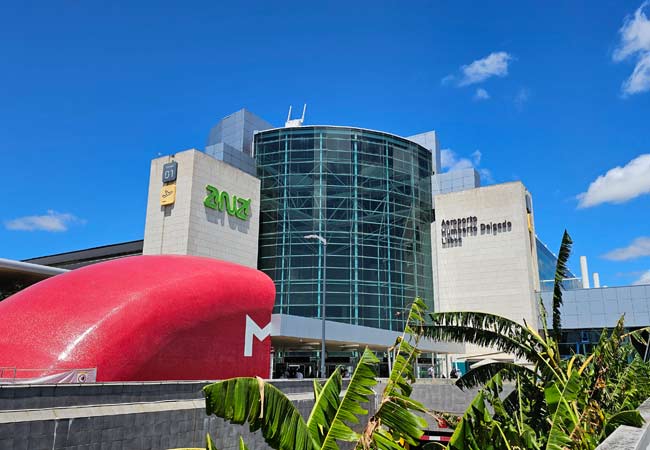
Terminal 1 of Lisbon Airport with the bright red entrance to the metro station to the left.
Arriving at Lisbon airport
Lisbon has a single airport, which is 7km to the north of the historic centre. The airport has two terminal buildings, but all arriving passengers pass through Terminal 1. Terminal 2 is used only for the departure of flights by low-cost airlines (such as Ryanair and Wizz Air).
The arrivals hall is the most modern section of the airport, but I always find it busy, verging on chaotic at peak times, as it was never designed to handle so many travellers
Upon exiting customs and entering the arrivals hall, the entrance to the metro will be on your right (you will need to exit the terminal building, but it is well signed). The taxi rank is directly in front, and the Uber/Bolt pick-up is hidden to the left in the "P2" short-stay car park. To get there, walk past the Starbucks café, pass through the two sets of doors, and the pick-up area will be directly in front of you (see image below).
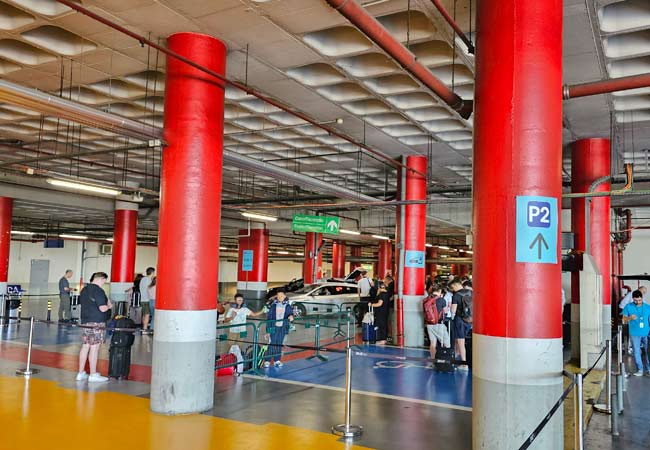
The Uber and Bolt pick-up is on the ground level of the short-stay car park (signed as P2), which is to the north of the arrivals hall. This is the only location for Uber and Bolt pick-ups, and the long queues are people waiting for their drivers.
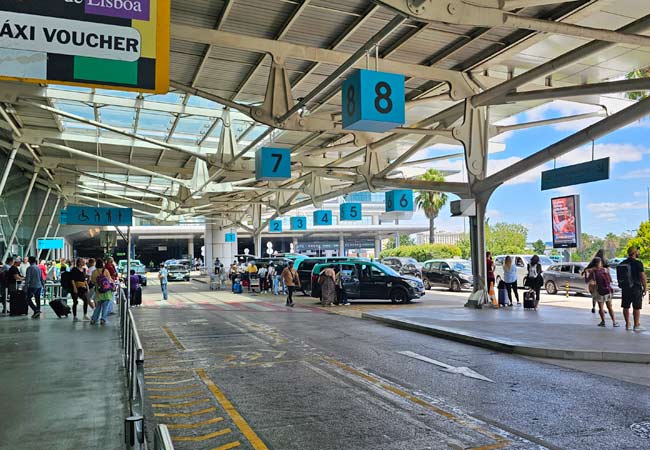
The taxi pick-up zone is always busy during the day.
Options for travel from Lisbon Airport
On exit from the airport, you have three main options for travel to the city centre: the metro, a taxi, or a ride-hailing app such as Uber or Bolt. Each of these modes of transportation has its own pros and cons:
Metro - The metro is inexpensive and a great option at busy times in the airport (10am-2pm and 4-7pm), but journeys will always take longer than an Uber, Bolt, or taxi. The main problem with the metro is that there are large areas of the city not served by the metro network. These include my area of Graça, the centre of Alfama, or western Lisbon such as Belém and Alcântara. Before rushing to the metro, make sure it serves the location you want to head to.
Taxi - The fastest mode of transportation to leave the airport, as there are always drivers waiting, but it will cost a third more than Uber or Bolt. Always be alert to driver scams, such as not switching the meter on or demanding a fixed price, which will always be more than it should be. There will be an extra fee for luggage (€1.60).
Uber/Bolt - My go-to option for onward travel, as they are significantly cheaper than taxis. You can see driver reviews and the route is clearly shown on the app, which adds a layer of security that my Portuguese wife appreciates when she is travelling by herself.
The main issue is that there can be very long waits during peak hours (5pm-10pm) for the app to connect to a driver. I have been told by many Uber/Bolt drivers that they reject airport pick-ups due to the heavy traffic to enter the site and the "slow process of picking up confused tourists who go to the wrong zone".
Insight: Uber and Bolt are convenient for travelling around Lisbon, and I highly recommend downloading either app and setting it up before you arrive. The initial app setup, connecting a bank card, and making the first booking can be especially tricky when tired after a long flight.
The Aerobus service no longer operates and was permanently cancelled in 2022. It is still mentioned in outdated tourist guides and websites, and I still hear it being asked for while passing through the airport.
Important Warning: Never accept rides from people who approach you in the terminal building. These are unregulated drivers who can charge whatever they like, and there are potential safety risks. Ignore them, even if you are unable to get an Uber or Bolt; in this situation, take a licensed taxi instead.
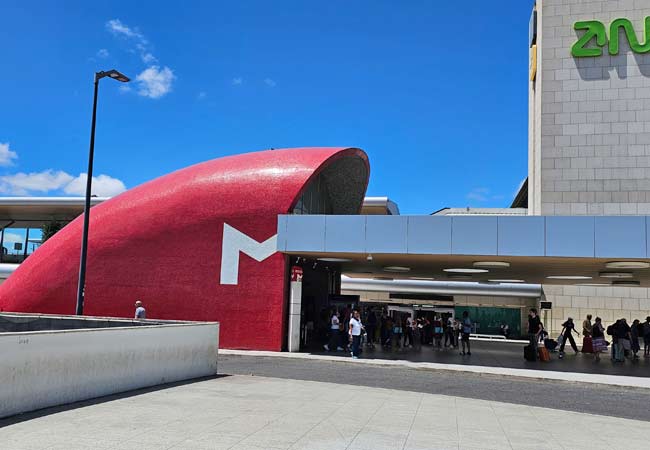
The entrance to the metro is easy to spot once you're outside! Turn right after exiting the arrivals hall and you will see it within a 30-second walk.
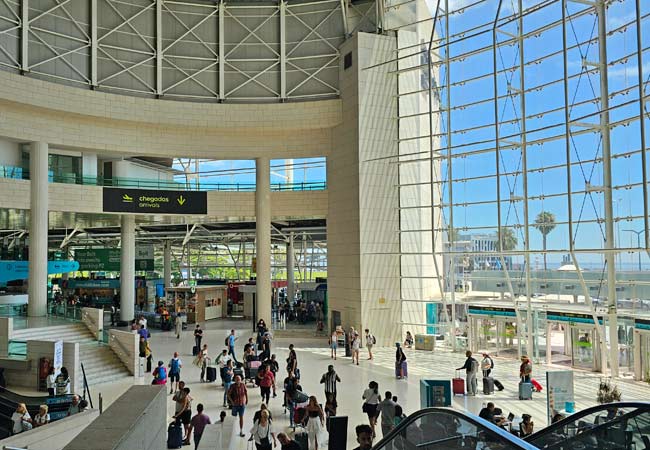
A view over the arrivals hall at lunch time after the rush of arrivals has passed. I took this photo at around 2pm, which is one of the quieter periods of the day.
Metro onward travel from the airport
Lisbon's metro is modern, safe and inexpensive, and for most tourists it is a good means of travel from the airport to the city centre. The metro is open from 6.30am to 1am and a single fare costs €1.90. This fare is charged to the re-usable Navegante card, which costs €0.50 for the initial purchase.
A sensible option I suggest for many visitors at the start of their trip is to purchase a Navegante card and charge it with €15. This type of ticket is referred to as "Zapping", and the metro fare is slightly cheaper at €1.72.
However, the real benefit of the “Zapping” is that it can be used to pay for all public transport within the city. This removes the hassle of trying to pay by cash on a packed tram or bus. The Zapping ticket can only be purchased from a ticket machine in a metro station, so it makes sense to purchase it at the airport’s metro station.
There is also a 24-hour unlimited public transport ticket for €7.25, but on your day of arrival, a Zapping or single ticket is a better choice.
You can also enter and pay for the metro using your contactless bank card. This fare is slightly more (€1.92) and your bank may charge extra fees if your home currency is not Euros. To enter the metro this way, go to any metro gate, swipe the panel with your contactless bank card and the gate will open when the payment has gone through.
Insight: Contactless payment is only available on the metro (it is not available on buses or trams). I still recommend getting a Zapping ticket for use on the buses and trams, and the metro fare is cheaper with Zapping than contactless.
All metro tickets are purchased from a ticket machine, and they have instructions in all major European languages.
The airport is the first station on the red metro line, while the popular tourist areas of Alfama, Baixa and Chiado are on the green or blue lines. This means that most visitors will have to make a connection at Alameda (for the green line) or São Sebastião (for the blue line). These connections are not difficult; there is clear signage and escalators or elevators.
Note: The single metro fare covers the entire journey, even if it involves travelling on two metro lines.
Related articles: Lisbon metro guide
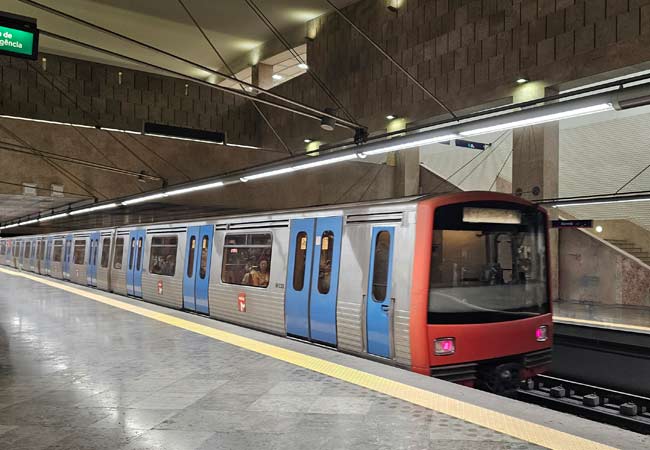
A metro pulling into Alameda station
How about a small group tour?
One of the best ways to explore Lisbon is to join a small group tour, especially in the first days of your trip when you are still finding your bearings. I have worked with GetYourGuide for the last seven years and have personally taken several of their Lisbon tours. Some of the best include:
The links above are affiliate links, and I earn a small commission if you book through them. I really appreciate it, as it helps me keep this website running.
Uber, Bolt and ride hailing apps
Uber and Bolt are an inexpensive way to travel around Lisbon. Their fares vary depending on demand, but a transfer to the centre of Lisbon typically costs around €10 and will be about a third cheaper than a taxi.
The key advantage of the ride-hailing apps is the ability to know the exact fare before booking a transfer – unlike a taxi where you are watching the meter get higher and higher. The other features which are appreciated by my wife when travelling by herself is that she can see the name of the driver and his rating. Also, during the journey she knows exactly where she is, using the map feature.
The main issue with both Uber and Bolt is that there can be very long waits for the app to connect to a driver. The reason is that many drivers do not want to pick up from the airport knowing it will incur delays, either from heavy traffic around the airport or from waiting for passengers to reach the pickup point. The Uber/Bolt business model is based around lots of short fares back-to-back, so a long wait wastes the driver's time, and many reject a fare once they see it is from the airport.
At peak times you can be left waiting endlessly for the app to connect you with a driver. In my experience, peak times are in the evening from 5pm to midnight and are significantly worse on Friday and Saturday nights.
The advice to reduce some of this waiting time is to request a higher car class, referred to as "comfort" by both Uber and Bolt. This increased fare will put you ahead of everyone else waiting, and drivers are more likely to prioritise a higher fare.
If I am travelling from the airport during peak times, I always request a comfort fare as I know there will be a long wait.
Uber/Bolt Pick-up
At the airport, there is a single location where Uber and Bolt drivers can pick up their passengers. This is located on the ground floor of the short-stay car park (referred to as P2). The pick-up area is north of the arrivals hall, just past the Starbucks coffee shop.
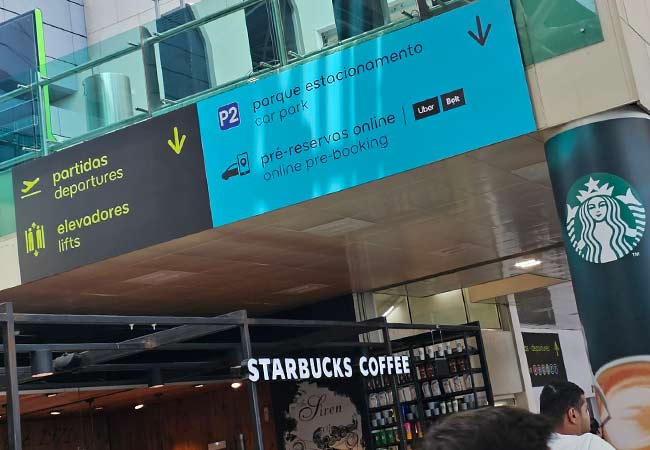
The entrance to the Uber/Bolt pick-up zone is just past the Starbucks coffee shop – follow the blue 'pre-reservas online' signs.
Insight: The former pick-up zone used to be in front of departures, in the 'Kiss and Fly' car park, but it was relocated to P2 in June 2023. While this change reduced the awful traffic around departures, it now means Uber/Bolts drop off passengers at the 'Kiss and Fly' and have to drive around the airport site for a pick-up, causing more traffic.
Uber and Bolt are very similar; ask any Portuguese citizen and you'll find there will be an equal split on which they prefer. Generally, Bolt is cheaper, but the standard of their cars (and drivers) is slightly lower. An Uber car has to be at least a Peugeot 308, whereas Bolt has no such requirement. Also, many drivers work for both companies. I personally always choose Uber, but my wife chooses Bolt.
Insight: Portugal does not have a tipping culture, and it is not standard practice to tip Uber or Bolt drivers in Portugal. However, a €1 or €2 coin is always appreciated.
Keep in mind that you'll need mobile internet to book an Uber or Bolt. If you're experiencing issues, make sure your phone's data roaming is turned on. Lisbon airport does have free internet in the terminal building, but it doesn’t fully extend to the P2 pick up-point.
A taxi from Lisbon airport to the city centre
A taxi from Lisbon Airport to your accommodation will be the fastest method of onward travel. There is always a queue of taxis waiting at the arrivals hall.
Lisbon's taxis are safe, modern and comparatively inexpensive. A typical journey from the airport to central Lisbon will cost €15 to €20, and there is an additional luggage surcharge of €1.60. This charge is for all luggage and not per piece.
All journeys are calculated using a taximeter, which must be used by law. The taxi rates will be displayed within the taxi (look for the official sticker on the rear left window), and the current 2026 fares are: €0.96 per km (Tariff 1 - Urban) with a minimum fare of €3.32. The waiting charge is €15.14 per hour (approximately €0.25 per minute stuck in traffic). At night (21:00 – 06:00), on weekends, and on public holidays, prices increase by approximately 20% to €1.21 per km with a minimum fare of €3.98.
The reason that taxis often seem so much more expensive than Uber/Bolt is the 20% surcharge applied in the evenings or at weekends, which is when most travellers are using them.
The other aspect to be aware of is that the larger 7-seater taxis will cost 20% more, irrespective of the number of passengers. At peak hours, there can be considerable queues of these larger taxis waiting at the taxi rank as Portuguese passengers refuse to take them due to the extra cost. Therefore, catching a 7-seater taxi in the evening will cost 40% more than the base fare (combining both surcharges).
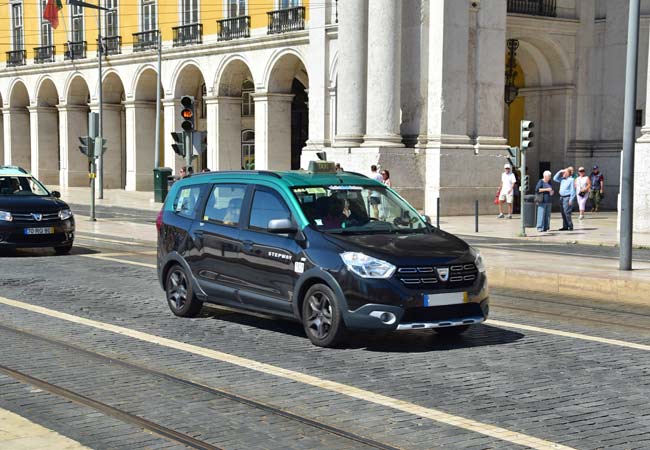
This is a larger taxi and would have a higher fare rate
Taxi drivers have gained a reputation for trying to scam passengers leaving the airport, and this has happened to me a number of times, especially when I was tired. The common trick is to not switch on the taxi-meter and demand a much higher fare at the end of the ride (such as €40). I have even heard stories where the driver starts with the meter, learns the passenger is new to Lisbon and then switches the meter off mid-journey.
Another lesser tactic is to claim that the luggage surcharge is for each piece of luggage.
Other onward travel advice
Other onward travel advice If your hotel is in the Alfama district, take an Uber, Bolt or taxi rather than public transport. Alfama is a very hilly district with narrow roads that have almost no public transport, and the nearest metro station (Santa Apolónia) is at the bottom of a steep hill.
If your hotel is in the Belém district, again consider taking an Uber (which will be €15-€20) as the metro network does not extend past the Cais do Sodré train station. If you wish to use public transport, catch the metro to Cais do Sodré metro station (green line) and then board the E15 tram.
Related article: Guide to the E15 tram – Belem guide
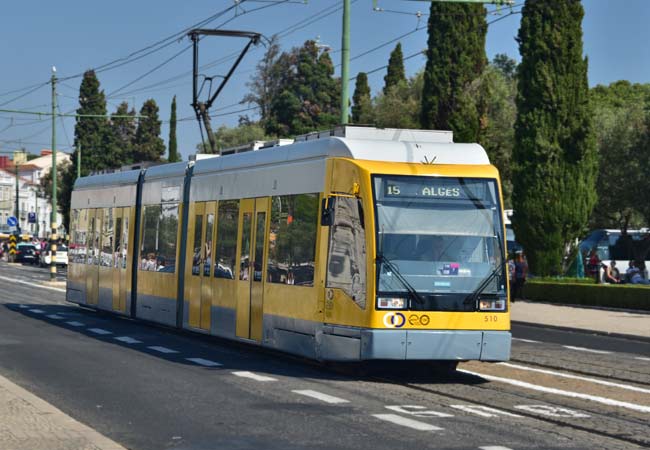
The E15 tram which connects central Lisbon with the Belem district
Other destinations from the airport
Airport to Oriente train station
Oriente is the main train station of Lisbon, with intercity express trains heading north to Porto and south to the Algarve. Oriente station is very close to the airport (2.4km), so a taxi (€5-7) is probably your best option. If you still wish to use public transport, take the red metro line three stops to Oriente metro station. Oriente station is spread over four levels with the metro on the lowest level and the railway station on the highest.
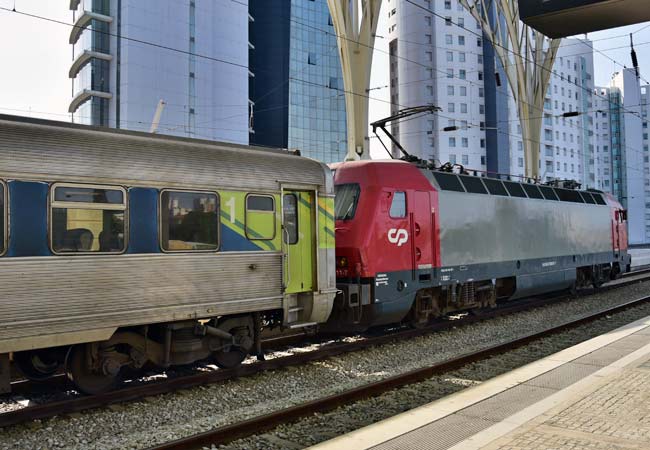
An Intercidades (IC) train at Oriente station
Airport to Sintra
Take a taxi (or the metro) to the Oriente train station and then catch the regional train to Sintra (€2.25 adult single); you’ll find a full guide here
Airport to Cascais
Take the metro (or Uber/Bolt) to Cais do Sodré train station and then catch the train to Cascais (€2.25 adult single); you’ll find a full guide here
Airport to Estoril
This is very similar to travelling to Cascais; take the metro to Cais do Sodré train station and then take the train to Estoril (€2.25 adult single)
Airport to the Santa Apolónia cruise ship terminal
The Terminal de Passageiros de Santa Apolónia is the new cruise terminal of Lisbon and is on the edge of the Alfama district. To head there catch the metro to the Santa Apolónia station, which is the final stop on the blue line.
Airport to Parque das Nações
The Parque das Nações is the modern side to historic Lisbon and is the location of the Altice Arena and the Feira Internacional de Lisboa (which hosts many conferences including Web Summit) - The airport is so close that Parque das Nações can be seen from the arrival’s buildings! Either catch a taxi (€7-10) or take the metro to Oriente metro station (red line)
Discover more of Lisbon with our most popular guides


About this guide: I'm Philip Giddings. I live in Graça with my Portuguese wife Carla, whose family are Lisboetas going back generations. I've been visiting Portugal since 2001, writing the independent guides at LisbonLisboaPortugal.com since 2009, and the site is now my full-time work. Carla first brought me up to Lisbon on an early trip, and twenty-five years on we are still walking the city together: summers on the packed beaches, quiet Saturdays at the Feira da Ladra, and hunting for a heater for our flat when the chilly winter arrives.
This site has 189 guides on Lisbon. It takes no payment from tourist boards, tour operators, or attractions for inclusion, and is funded by affiliate commissions on tour bookings, disclosed on every page that contains them. Every practical detail (ticket prices, opening hours, bus routes, time-slot policies) is checked against the official sources and verified in person on the walks I make through the city each week. Read the full story here.