LisbonLisboaPortugal.com
The best independent guide to Lisbon
LisbonLisboaPortugal.com
The best independent guide to Lisbon
Lisbon's Best Markets: A Local's Guide for 2026
Lisbon has a vibrant market scene, ranging from local municipal markets specialising in home grown foods, to bustling flea markets, and niche craft fairs.
Having lived in Lisbon for 5 years and been married to a Portuguese woman since 2010, I've come to appreciate that the markets are not just a great place to buy fresh and local but also a setting to socialise and support family businesses.
Markets are ingrained in Portuguese culture, with my mother-in-law still buying her fruit and veg from the same stall she visited as a teenager, trusting both the quality and affordability. This mentality extends to the stalls of many of the municipal markets, with their fresh fish stalls, local produce such as fresh honey, olive oils and seasonal fruit.
There are regular craft markets with skilled artisans or niche sellers testing new ideas, the most popular being the LX Factory Sunday market. For curiosities and unexpected items there is no better place to browse than the twice weekly Feira da Ladra hosted in central Alfama, where you can find yourself haggling over vintage trinkets or rummaging through coins from around the world.
Add to these markets some delicious Portuguese street food, whether a bifana sandwich or a sweet pastry, and you have a wonderful non-touristy activity, ideal for a wet day or when you just need to get out of the sun.
As is often the case with travel, the most accessible markets for visitors lack a genuine local feel, such as Mercado da Ribeira attached to the famous Time Out Food market. However, with a little effort you can find truly authentic Portuguese affairs like the covered Mercado de Benfica or even the Feira do Relógio Sunday market.
This guide will show you all of my favourite Lisbon markets, why to visit, what to expect and how to get the most out of them.
Related articles: Where to go shopping in Lisbon?
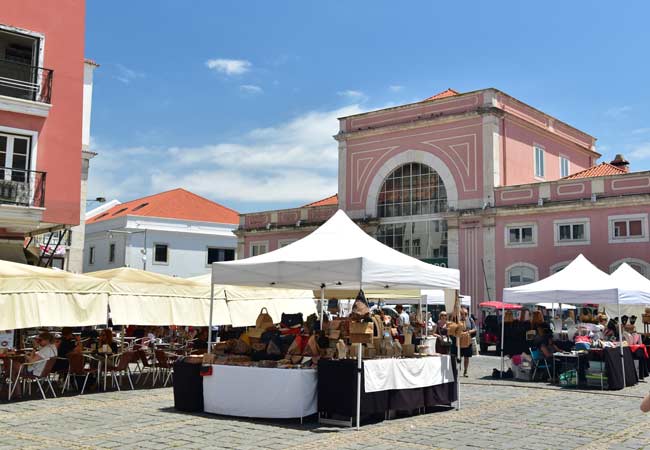
A pop-up craft market in Largo do Chafariz, Alfama. These appear unannounced throughout the year
The best markets in Lisbon
Here are my picks for the best markets in Lisbon:
1) Feira da Ladra - My favourite market in Lisbon, held in the Alfama district every Saturday and Tuesday. Often described as a flea market, but for me it's a place to browse relics of past generations and hunt out that one interesting find.
2) Feira do Relógio - The true Portuguese Sunday market, with the cheapest prices in the city. Fresh fruit, veg and cakes, but you need your senses switched on to avoid overpaying for tat or even losing your wallet. Authentic in every way, good or bad, but a true experience.
3) Mercado de Arroios - Authentic fresh produce morning market, housed in a unique circular building. This is a classic heart-of-the-community market, and just a short metro ride on the green line from the historic centre of Lisbon. I suggest this market for any visitor who wants to experience a true Lisbon market.
4) Mercado de Campo de Ourique - The calmer and lesser-known food and covered market. The Time Out food market is for tourists, while Mercado de Campo de Ourique is for long stay residents and Portuguese. Mercado de Campo de Ourique is better than Time Out and Mercado da Ribeira in every possible way, except it is a long way from the historic centre of Lisbon.
5) LX Market - This is the reason I head to Alcantara on a sunny Sunday. Hosted in the carpark of the LX Factory is a craft market comprising art stalls and unique craft stalls, from creative people not yet big enough to have their own stores. Do not expect bargains here though; it is personalised and handmade.
6) Mercado da Ribeira (Time Out) - The oldest covered market in Lisbon, and the closest thing most tourists see to a traditional Portuguese market. One half of the building houses the Time Out food market and the other hosts a traditional market of fresh produce. Sadly, the food hall side is often too crowded with tourists to fully enjoy.
7) Mercado de Alvalade - One of my favourite covered markets, with a great selection of fresh produce, along with the buzz of a bustling market. As this market sits in one of the most affluent neighbourhoods of Lisbon, everything is of a very high quality and just feels better here.
8) Mercado de Benfica - Out in Benfica and well off the tourist trail. A community centred market loved by locals and with a true neighbourhood feel. It's far from the centre, which is half the appeal.
Insight: : Almost every district in Lisbon will have its own indoor market with a handful of stalls selling local produce. These are often a much better location to shop than the supermarkets.
The map below shows the location of the markets discussed in this guide (Note: zoom out to see all of the points)
Legend: 1) Feira da Ladra 2) Feira do Relógio 3) Mercado de Arroios 4) Mercado de Campo de Ourique 5) LX Market 6) Mercado da Ribeira 7) Mercado de Alvalade 8) Mercado de Benfica
Why are markets so popular in Lisbon?
Portugal has a thriving market scene, as they provide much better value than the supermarkets and shops, which can be surprisingly expensive.
From my firsthand experience, the Portuguese genuinely enjoy cooking and starting from base ingredients, such as preparing fresh sauces. If you're preparing fresh food, you also want fresh produce, and know that it has been grown locally or purchased from the same trader you trust. This combination of trust and lower prices means Portuguese markets have continued to thrive, while markets in many other countries have dwindled.
Another aspect the Portuguese enjoy is the social side of the market. In a supermarket there is barely any interaction apart from avoiding someone else's trolley, but in a market the traders have time for the obligatory 10 minute chat about your family. Many of the market stall holders have done the same job for decades seeing entire families grow up. So the market is not just a place to shop, it is a place to socialise.
How about a small group tour?
If you'd prefer a guided introduction to Lisbon rather than exploring independently, joining a small group tour is a great option. We have partnered with GetYourGuide for the last six years, and some of their best tours include:
The links above are affiliate links, and I earn a small commission if you book through them. I really appreciate it, as it helps me keep this website running.
The most popular markets in Lisbon
The Feira da Ladra
The Feira da Ladra market is a twice weekly (Saturday and Tuesday) market held in the eastern side of the Alfama district, in the streets just north of the Panteão Nacional.
It is classed as a flea market, but it covers a range of stalls and items. The lower half comprises bric-a-brac and what often looks like people clearing out their houses; further up are the regular stalls, and these range from tourist gifts through to collectables and lower end antiques.
This is a market to browse, spot something unique, or say "I haven't seen one of those in years” It is an enjoyable shopping experience even for those not particularly interested in shopping, but to get the most from it, try to avoid the busy times (10:30am to 1pm).
The Saturday market is always busier than Tuesday's, but Saturday always has a more social feel with bars and restaurants packed on a sunny day. Tabernita is my favourite for food and Focaccia in Giro for something a bit lighter, but both can be busy on market days.
The Feira da Ladra translates to "thieves' market" and was historically where items of questionable origin were sold. Today, the market traders are more reputable, though you should never purchase traditional painted tiles, as they may have been stolen from churches or old houses.
For serious collectors seeking a rare find, be aware that there are never any real bargains at the Feira da Ladra, as prices are squarely aimed at the steady flow of tourists who wander through. The very few stand-out pieces that do pass through the market are sold early in the day, so arrive first thing if you hope to find something good.
At the centre of the market is a traditional covered market, the Mercado de Santa Clara, which often has a specialist market inside, such as art, books or ceramics. Within the Mercado de Santa Clara is an antique store, Marcelo Antiguidades, while the delightful Campo Sta Clara Ceramics shop sits on the opposite side of the street.
I really like visiting the Feira da Ladra on a bright spring day: browsing the stalls for a bit, having a coffee in the Jardim Botto Machado (the park the market spreads around), before lunch at Tabernita.
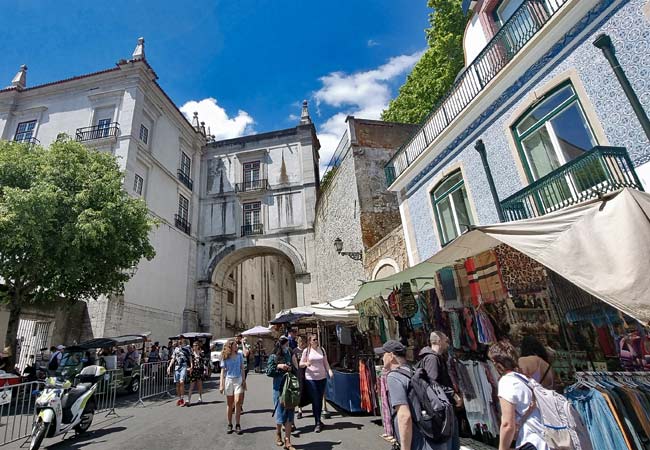
The Feira da Ladra is hosted in the pretty streets of Alfama
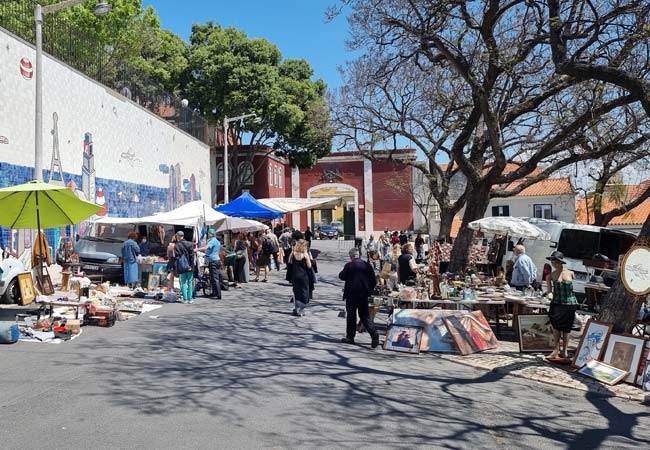
The lower part of the market, where you'll find everything from old paintings to second-hand clothes
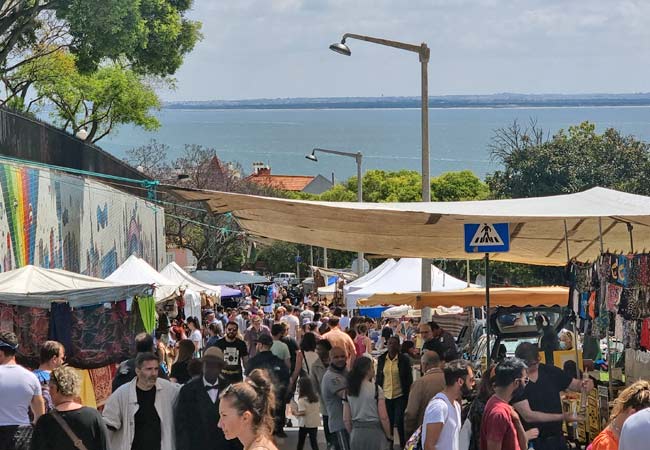
Peak mid-morning on a hot summer's day. The crowds can be exhausting.
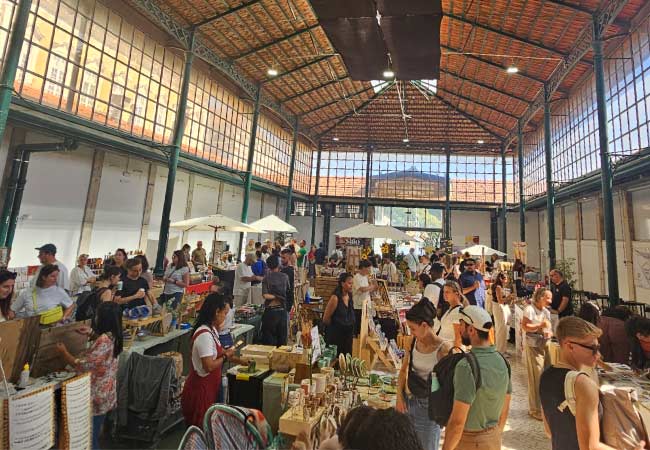
Inside the Mercado de Santa Clara
The Feira do Relógio
The Feira do Relógio is Lisbon's largest market, held every Sunday morning in the Marvila district (formerly known as Chelas).
This is a sprawling market with over 300 stalls, covering every conceivable item for sale along with all aspects of market life in Portugal: both the good and bad.
There are countless stalls selling similar low-quality clothing, household items and electronics I wouldn't trust plugging in. Yet among all the mediocrity, there are some fascinating stalls selling locally produced wines, honey, olive oil, plants and gifts. I even found my niece's baptism outfit here. The main appeal is the bustling central food area, where you'll find street food stalls, freshly baked breads, cheeses, meats, cakes and all manner of Portuguese delicacies.
The Portuguese love this market, but for many visitors it is too chaotic and exhausting. Visiting the market requires constant vigilance, whether avoiding junk purchases, being overcharged or having your wallet swiped by a sneaky thief.
For most tourists, a visit to the Feira da Ladra or one of the calmer covered markets, such as the Mercado de Arroios, is a much more pleasurable experience. But for those who enjoy the thrill of a real market, the Feira do Relógio delivers.
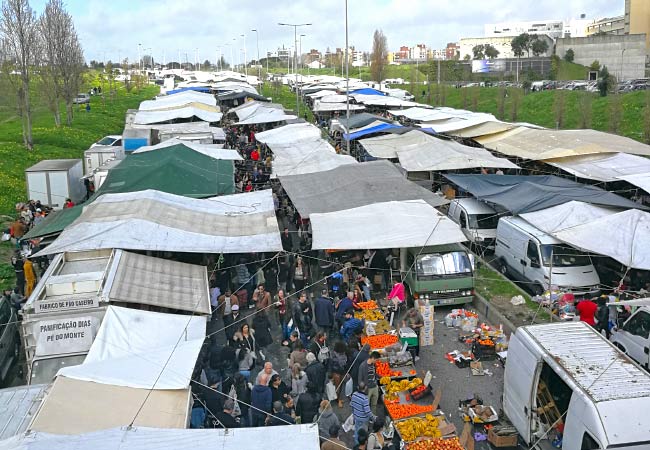
There’s over 2km of stalls in the Feira do Relógio
The Mercado da Ribeira
This grand 1890s building is famed for its western hall, which houses the Time Out food market. The original concept was a marvellous idea: bring together many of Portugal's finest chefs in the form of food stalls, all set in a social environment. There is a large bench style seating area surrounded by 26 restaurants and 8 bars, offering every style of Portuguese food possible along with many international cuisines.
It was fantastic in the early years, and I ate there many times, but now the magic has been lost, and it suffers from its own popularity. New visitors think it's brilliant, long-stay residents think it's overpriced, while Portuguese locals think it's a tourist trap and unfairly regard it much worse than it actually is (my Portuguese wife included).
It is a buzzing venue that is a wonderful place for lunch, with the food market continuing late into the evening, often hosting live music. As a venue designed for tourism, prices (especially for drinks) are expensive, but the food is delicious and the atmosphere is always vibrant and social. Every time I eat there, I end up chatting to tourists newly arrived in Lisbon.
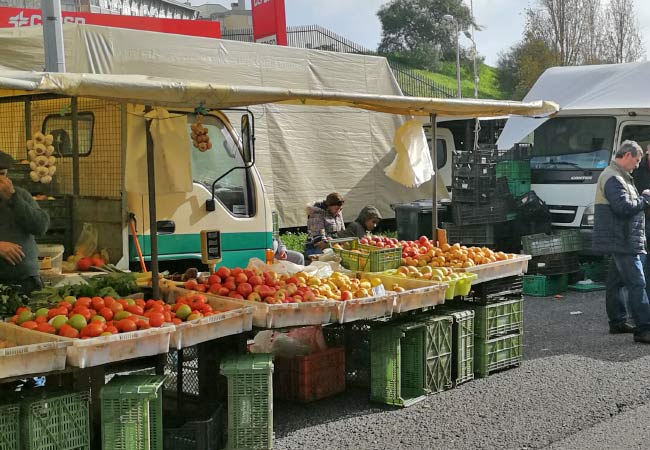
The Time Out market dominates, but it only occupies half the building. The conversion moved the traditional market stall holders into the eastern wing, and this is where most visitors will experience a genuine Portuguese market. The Mercado da Ribeira still sells inexpensive fresh produce and offers a glimpse of everyday Lisbon life in a district rapidly being swamped by tourism.
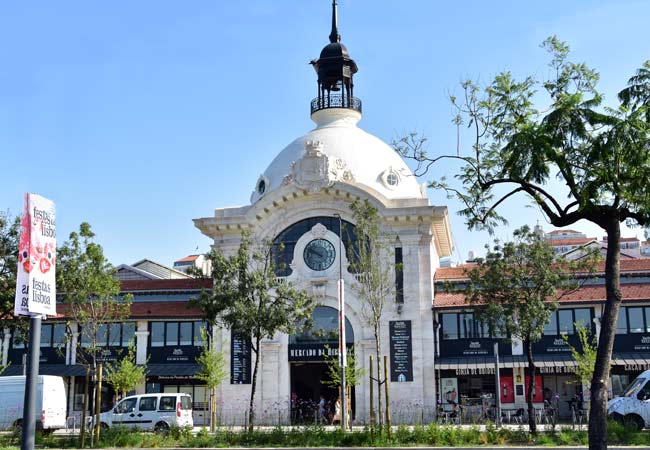
The grand 1890s exterior of the Mercado da Ribeira
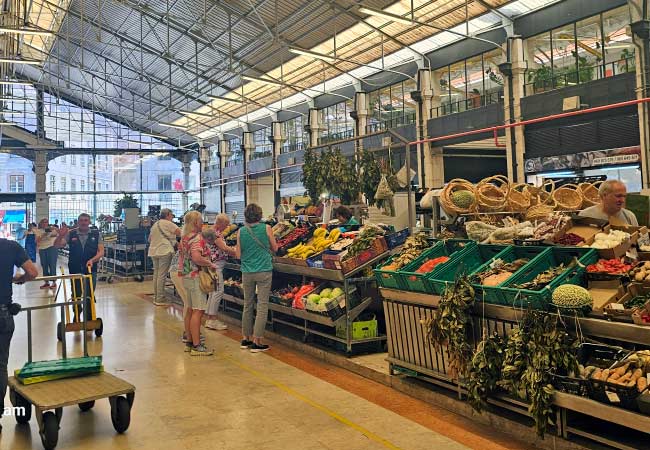
The fruit and vegetable section of the eastern wing, where you'll hear Portuguese spoken and see locals doing their daily shop
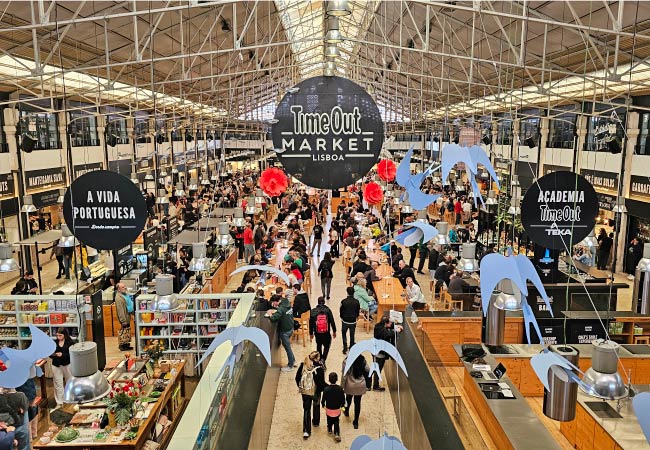
The Time Out food market buzzes with tourists from opening until late evening
Mercado de Arroios
If you want to experience a traditional fresh produce market, then I recommend the Mercado de Arroios. This covered market is housed in a circular, domed building dating from 1942, which gives it a light and airy feel unlike Lisbon's other covered markets.
Inside you'll find stalls selling meats, fish, fruit and vegetables, while the surrounding streets have good shops, cafes and restaurants. The entire Arroios neighbourhood is popular with long-stay foreign residents and is worth exploring if you have more time in Lisbon.
The other reason I recommend Arroios market for a visit, is it easy to travel to. Simply take the green metro line five stops from Baixa to Arroios station, then it's a three-minute walk
Open Monday to Saturday, 7am to 2pm. Closed Sunday.
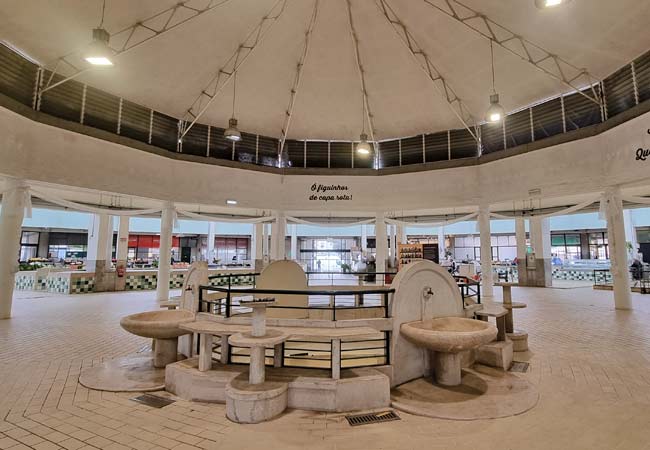
The Mercado de Campo de Ourique
This is the smaller, calmer and, in the opinion of most people who live there, the better version of the Time Out Market/Mercado da Ribeira.
The building and stalls are slightly more refined than the Mercado de Arroios but its highlight is the relaxed food court which occupies half of the market, with approximately 20 food stalls. It's much smaller than the Time Out market, so do not go expecting the same wide variety of stalls but in almost every other aspect it is better.
The restaurant's food quality always feels better (possibly because they are not designed for handling thousands of servings per day) and the prices are lower and more in line with what they should be for Lisbon. Every time I have eaten here I've enjoyed good food. The atmosphere is vibrant and lively on Friday and Saturday nights, but it is less chaotic than Time Out Market.
The market stall section of Mercado de Campo de Ourique has a wide range of stalls, including fish, fruit, vegetables, and local produce along with a range of handcrafts and gifts. I really do recommend a visit and it is ideal around lunch time. The issue is that the market is in the Campo de Ourique district of Lisbon, 3km from the historic centre of Lisbon and Rossio Plaza.
Fortunately, the market is near the final stop of the number 28 tram. So for friends who want to ride the tram instead of enduring the packed section through Graça, Alfama and Baixa, I tell them to take it from Baixa to Campo de Ourique, have lunch at the market, and then ride it back.
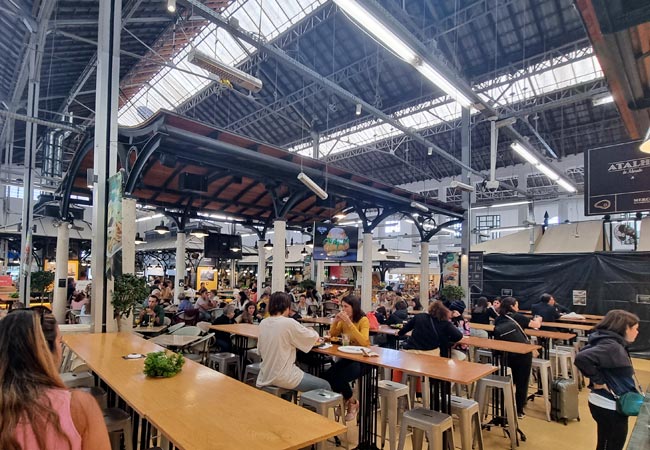
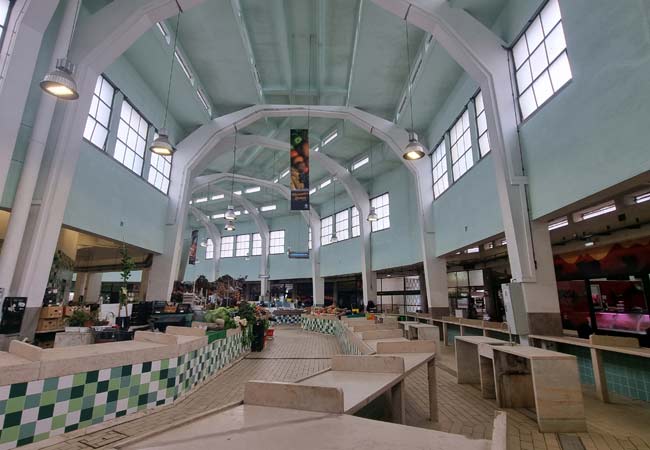
The food court serves everything from Portuguese petiscos to Asian fusion, with communal seating that creates a social dining experience.
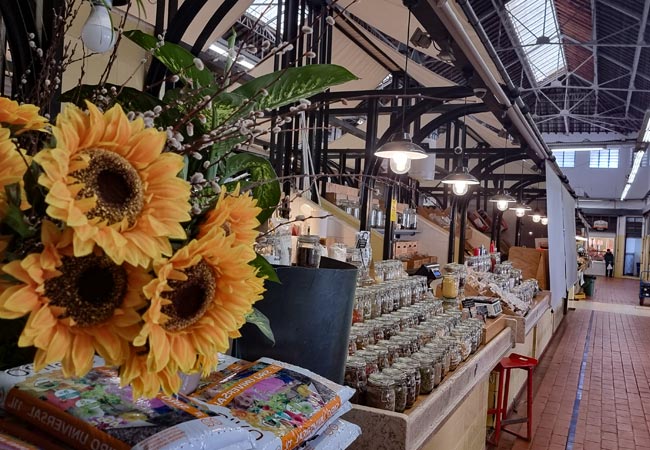
The traditional market stalls, where local vendors have been central to the Campo de Ourique neighbourhood for decades
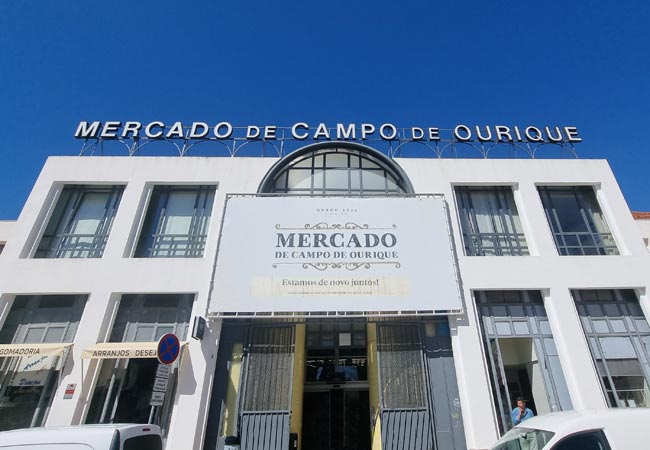
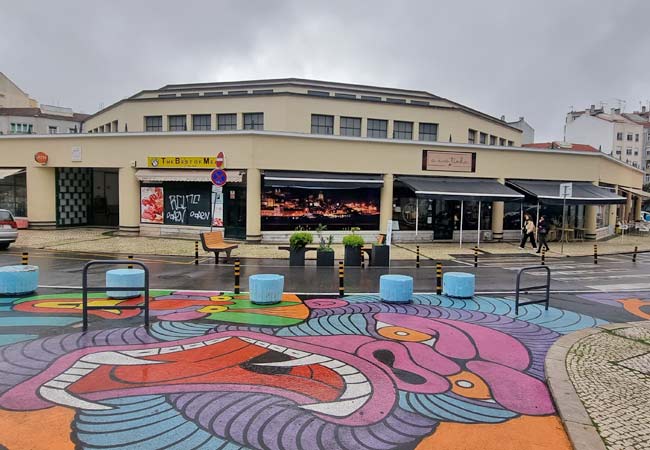
The Mercado de Campo de Ourique's distinctive 1934 Art Deco building, where historic architecture meets modern food culture
Lx Market
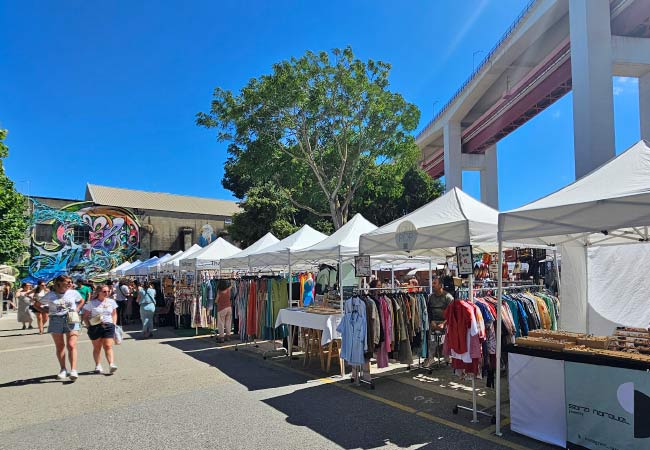
The Lx Market is an artisan and craft market held every Sunday morning and afternoon in the LxFactory. It is not a large market with only 15 to 20 stalls, but the vendors focus on selling Portuguese-made goods - think locally designed jewellery, ceramics, vintage clothing, and art prints. Prices reflect the handmade, artisan nature of the goods, so this isn't a bargain-hunting market like Feira da Ladra. However, the quality and uniqueness of items make it worthwhile if you're looking for authentic, locally-made gifts or one-off pieces.
It's very much a market to browse and find something special, while enjoying the setting of LxFactory with its converted factory units and striking murals. LxFactory is best visited on Sunday afternoon, while the bars and restaurants are bustling and there is a steady stream of people meandering through the unique stores of the complex.
Mercado de Alvalade
I have a soft spot for this market as it was my go-to when we lived in Marvila. While my wife's family loved the modern Feira Nova supermarket (now Pingo Doce) in the neighbourhood, I would always take a taxi to Mercado de Alvalade for proper market shopping. To me it represented true Lisbon: a traditional market with quality produce and proper stall holders.
Now years later and having seen much more of the city, I can appreciate that Mercado de Alvalade is actually one of the best covered markets in Lisbon. The stalls sell many of the same items as other markets, but as this market sits in the popular and affluent Alvalade neighbourhood, everything is just slightly better. The fish is fresher, the cuts of meat have more care taken, and the fruit and veg are higher quality.
I placed Mercado de Alvalade near the end of this guide, as for most tourists Arroios market is closer and likely what they are seeking. However, if you've read to the end of this guide and are willing to ride the extra four stops on the green metro, you will discover what I think is the better market.
Mercado de Benfica
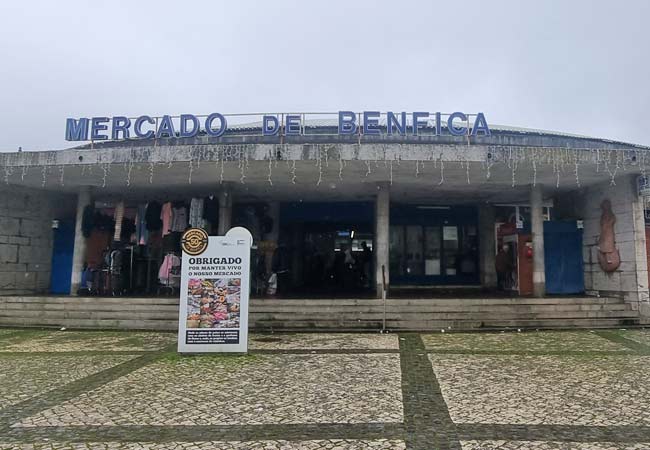
On the far western side of Lisbon is the Mercado de Benfica, serving one of the oldest working class communities of the city. This is an area where few tourists would consider going, which makes the market even more authentic.
The market is housed in a 50-year-old concrete structure, which was built for function and not for beauty, and the stalls are grouped together by the items they sell. There is a section for fish, a row of fresh fruit and vegetables and around the edge are traditional talho (butchers), with their fresh cuts of meat lined up.
The market also contains a number of spice stalls that reflect the diverse community of Africans and Brazilians who live in the Benfica neighbourhood. This is a true neighbourhood market, where people actually shop, away from the tourist-focused markets in the centre.
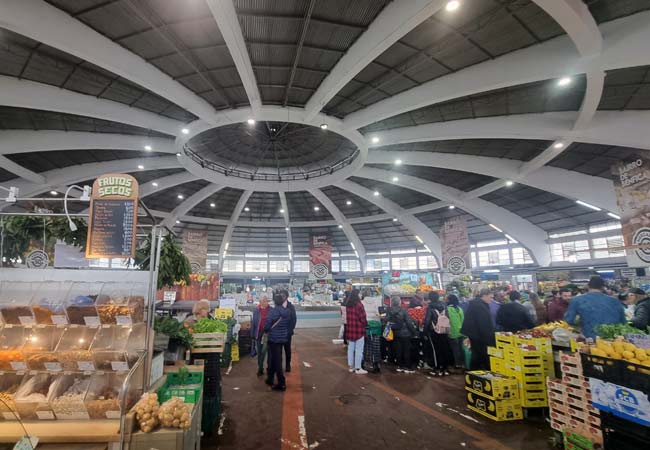
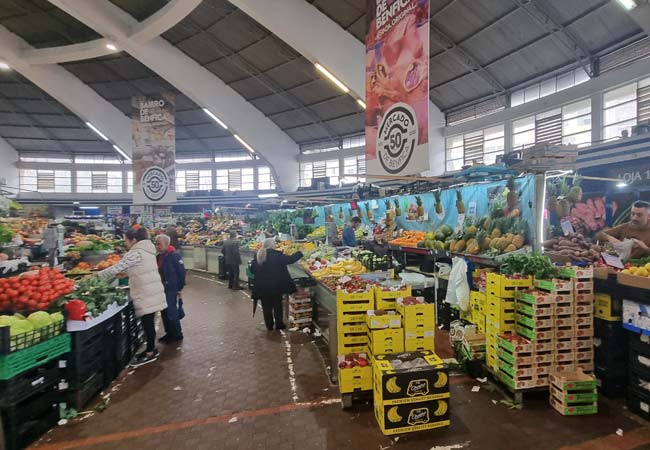
The middle ring, with stalls selling fresh fruit and vegetables
Discover more of Lisbon with our most popular guides


About this guide: I'm Philip Giddings. I live in Graça with my Portuguese wife Carla, whose family are Lisboetas going back generations. I've been visiting Portugal since 2001, writing the independent guides at LisbonLisboaPortugal.com since 2009, and the site is now my full-time work. Carla first brought me up to Lisbon on an early trip, and twenty-five years on we are still walking the city together: summers on the packed beaches, quiet Saturdays at the Feira da Ladra, and hunting for a heater for our flat when the chilly winter arrives.
This site has 189 guides on Lisbon. It takes no payment from tourist boards, tour operators, or attractions for inclusion, and is funded by affiliate commissions on tour bookings, disclosed on every page that contains them. Every practical detail (ticket prices, opening hours, bus routes, time-slot policies) is checked against the official sources and verified in person on the walks I make through the city each week. Read the full story here.