LisbonLisboaPortugal.com
The best independent guide to Lisbon
LisbonLisboaPortugal.com
The best independent guide to Lisbon
Where to stay in Lisbon? The best neighbourhoods and districts for your holiday in 2026
Although Lisbon may appear as a large, sprawling city on a map, its historic heart is actually quite compact. The main tourist neighbourhoods are clustered closely together, and each one is easily walkable from the next.
These districts may be close, but they are varied: from the grand plazas of Baixa, and the maze-like streets of Alfama, to the late-night energy of the Bairro Alto. Choosing the right area to stay is one of the most important decisions you will make when planning your trip.
Your ideal base will depend entirely on the type of holiday you are seeking. Are you primarily interested in sightseeing and historic monuments? Do you want to be close to vibrant nightlife? Are you travelling with family or would you prefer a more relaxed and authentic experience?
Having visited Lisbon regularly for over 26 years and lived here for the last five, I know all the insider details that you won't find in a generic blog post. Let me share my knowledge and show you the best areas of Lisbon for your trip in 2026.
The best districts of Lisbon for hotels and accommodation
If you are new to Lisbon, the five best districts and neighbourhoods to consider are:
1) Baixa 2) Avenida da Liberdade 3) Alfama 4) Bairro Alto/Chiado 5) Cais do Sodré
Each of these areas is covered in detail below.
Personal Insight: I recommend Baixa for friends on a brief weekend stay who want to be central to everything, while for older family members who value safety and comfort, I suggest Avenida da Liberdade. My young nephew who wants to party and have fun is sent to Bairro Alto. We live in Graça, and while it's my favourite part of the city, it can be a touch too remote for a first visit.
If you are heading to Lisbon for a business trip, the Parque das Nações district to the northeast of the city centre is generally the best area, with its concentration of modern hotels and excellent transport connections.
The map I created below displays the main tourist areas of central Lisbon:
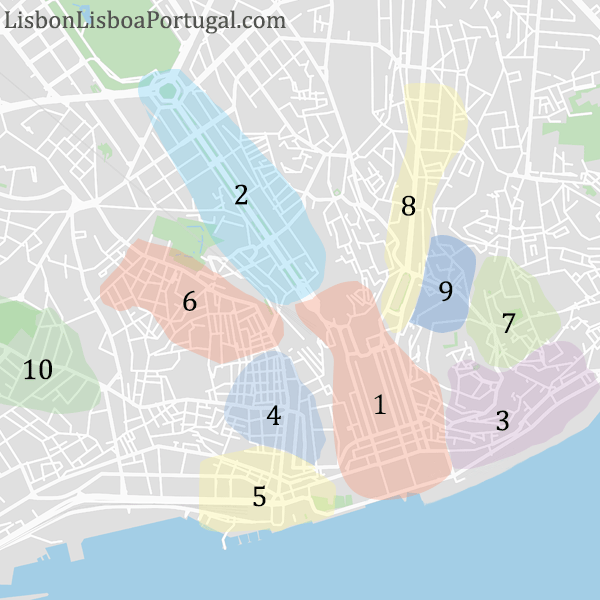
Tourist areas of central Lisbon: 1) Baixa 2) Avenida da Liberdade 3) Alfama 4) Bairro Alto/Chiado 5) Cais do Sodré 6) Príncipe Real 7) Graça 8) Martim Moniz, Intendente and Anjos (green metro region) 9) Mouraria 10) Estrela
The map below shows the location of hotels and rental rooms in central Lisbon. By altering the date to suit your holiday, the map will display current prices:
Lisbon's Outer Districts
Along with central Lisbon, there are several other popular areas for tourists and accommodation in the wider city. The map below shows these outer districts, with the dotted section indicating the area covered in the first map. The routes of the four metro lines (Red, Blue, Green and Yellow) are also shown.
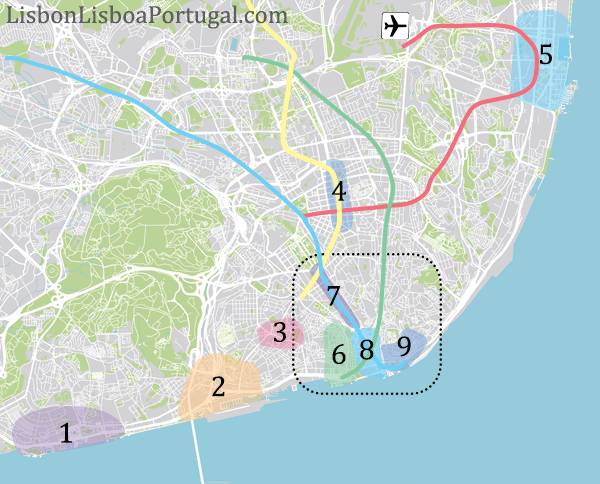
Legend: 1) Belém 2) Alcantara 3) Estrela 4) Campo Pequeno 5) Parque das Nações 6) Bairro Alto & Cais do Sodré 7) Avenida da Liberdade 8) Baixa 9) Alfama
The Best Areas of Lisbon
Most popular areas to stay:
The Baixa district is the grand and historic centre of Lisbon, built on a grid pattern after the devastating earthquake of 1755. Its wide pedestrianised streets are lined with classical buildings, traditional shops and cafés, and you are within easy walking distance of most major attractions. This is close to everything and is where I personally recommend to most first-time visitors to Lisbon. Its only downside is its popularity, meaning rooms do sell out and prices can be high if not booked in advance.
The Avenida da Liberdade is Lisbon's most expensive street: a broad, tree-lined boulevard stretching uphill from the Baixa towards the Marquês de Pombal roundabout. The avenue is home to designer boutiques, upmarket restaurants and many of the city's finest hotels. If you are looking for a touch of elegance and willing to spend a little extra, this is an excellent choice. The avenue is relatively flat into Baixa, so easy to navigate on foot; this is where I suggested my Nana stay for her first visit.
The Alfama district is one of the oldest parts of Lisbon, having survived the 1755 earthquake largely intact. Its steep hills, narrow cobbled alleys and tiled façades give it an atmosphere quite unlike anywhere else in the city. Accommodation here tends to be characterful apartments and guesthouses rather than large hotels, making it ideal if you prefer somewhere with local flavour.
Having stayed in Alfama many times, I can tell you that the ancient houses have no sound insulation, and you will hear your neighbour getting up at 6:00 AM when they leave for work. Also, don't be the awful tourist who keeps the entire building awake with post-night-out drinks.
For nightlife and a lively atmosphere
The Bairro Alto is Lisbon's famous party district, where dozens of tiny bars spill out onto the streets every evening. The atmosphere is electric, particularly at weekends, but do not expect much sleep if your accommodation is in the heart of the action. By day the neighbourhood is quiet and pleasant to wander, with independent shops and traditional restaurants.
Cais do Sodré is today's lively district loved by young visitors and those in the know, such a transformation from the seedy red-light district I avoided 20 years ago. At its heart is Pink Street, with late-night bars, clubs and a steady stream of street performers. It still is a little rough around the edges but this just adds to the no-cares vibe of the district.
For a less touristy, more Portuguese feel
Graça is a working-class neighbourhood on the hill above the Alfama, popular with locals rather than tourists. The streets are full of traditional restaurants (such as O Pitéu da Graça and O João), neighbourhood shops and elderly residents chatting on doorsteps. This area of the city is so good that we live here ourselves, as it offers authentic Lisbon that is increasingly hard to find in the lower districts. Its downside is the steep downhill walk (and uphill return) required to go anywhere. There is also a lack of public transport; the only service is the Tram 28, which is always crowded with tourists.
Príncipe Real is one of Lisbon's most affluent districts, favoured by well-to-do locals and creative professionals. The neighbourhood centres on a leafy square with a famous cedar tree, and the surrounding streets are home to antique shops, design studios and excellent restaurants. It feels calm and refined compared to the busier tourist areas. The southern side of the district (where it meets Bairro Alto) is home to the city's gay scene and is known for its inclusive atmosphere.
Estrela is a peaceful and prosperous residential district, known for the beautiful Estrela Basilica and its adjacent gardens. The pace of life here is noticeably slower, and you will find yourself surrounded by elegant townhouses and locals going about their daily routines rather than crowds of tourists. I've witnessed this area become a favourite for American families who have moved to the city, so expect to hear an American drawl alongside Portuguese in the local cafés.
Alternative locations
Belém is one of the most popular areas to visit in Lisbon, thanks to its cluster of historic monuments including the Tower of Belém and the Jerónimos Monastery. However, it lies around six kilometres west of the city centre, so staying here means you will need to factor in travel time whenever you want to explore the rest of Lisbon. In the evenings the area can feel rather quiet.
Alcântara is regarded as Lisbon's creative and artisan quarter (though this is changing as rents and prices rise), and is centred around the LX Factory, a converted industrial complex filled with independent shops, studios, restaurants and a weekend market. The neighbourhood appeals to those who enjoy a more alternative, design-led atmosphere, though it is not as convenient for traditional sightseeing. The city's new creative/underground area is Marvila (centred around Fábrica Braço de Prata and 8 Marvila), but it is too far out to recommend to first-time visitors.
Campo Pequeno is the original business district of Lisbon, recognisable by its distinctive bullring. The area offers higher-end hotels and excellent metro connections to the rest of the city, making it a practical base if you do not mind being outside the historic centre.
It’s my first visit to Lisbon, which district should I stay in?
If you are new to Lisbon, I recommend staying within the Baixa district or close to the Avenida da Liberdade. This is where I always suggest family and friends base themselves when visiting Lisbon for the first time.
This central area offers an excellent selection of restaurants, bars and shops, and you will be within easy reach of most of Lisbon's main tourist attractions. You are also within walking distance of the vibrant nightlife in the Bairro Alto and Cais do Sodré, but far enough away to avoid the late-night noise and the chaos that spills onto the streets in the early hours.
The Alfama district is another popular choice for first-time visitors. As one of the oldest parts of Lisbon, it has a wonderful atmosphere, and there is a wide selection of characterful apartments and guesthouses hidden within its warren of alleys and winding lanes. The main drawback to staying in the Alfama is the terrain: the neighbourhood is built on a steep hillside. I've seen many first-timers regret their choice while dragging a heavy suitcase up steep hills lined with uneven cobblestones, and the tiny streets make it inaccessible for Uber or taxis.
One area I suggest being cautious about is Mouraria. While it's the historic birthplace of Fado and has incredible multicultural food, the 'gritty' vibe has shifted recently. From my observations, the stretch leading toward Martim Moniz has become increasingly dodgy. If you're a confident traveller who wants the best curry in Lisbon, go for a visit, but for your first time sleeping in the city, the poorly lit side-alleys here can feel intimidating compared to the open squares of Baixa.
Related articles: Alfama guide - Baixa guide
Choose your area before looking for accommodation!
Always decide which part of Lisbon you want to stay in before you start browsing hotels and apartments. This may sound obvious, but it is all too easy to be drawn in by a tempting discount or glowing reviews without properly considering where the location is.
I have seen plenty of travellers book somewhere that looked perfect online, only for them to discover it was in Roma, a forty-minute walk from anywhere they wanted to visit. The other thing I often see is that when visitors look at a map of Lisbon they do not realise the main tourist and historic centre is along the waterfront. Google Maps also confusingly has the word “Lisbon” above Intendente, one of the worst areas of the city in my opinion.
Before rushing to select a hotel, choose your neighbourhood first and this will save you from any disappointment.
My Advice: If you decide to stay a little further out from the centre, always make sure your accommodation is close to a metro station. Lisbon's metro is fast, reliable and inexpensive, and having a station nearby will make a significant difference to how easily you can get around.
Where for a more relaxed holiday to Lisbon?
The Baixa, Alfama and Bairro Alto lie at the heart of the bustling tourist centre. If you would prefer a calmer base for your holiday, the districts of Estrela or Príncipe Real are well worth considering. Both are prosperous, affluent neighbourhoods with handsome period houses, leafy streets and cafés filled with Portuguese locals rather than tourists.
While these areas are undoubtedly appealing, they can feel somewhat removed from the main sights, and you will need to factor in more walking or the occasional tram ride when visiting the city's principal attractions. It is a trade-off between atmosphere and convenience that suits some visitors better than others.
Graça is another alternative, a working-class neighbourhood full of character and local life. However, from my own experience, the number of tourists visiting Graça has increased noticeably over the past couple of years. It still feels more authentically Portuguese than the Baixa or Alfama, but it is no longer the hidden gem it once was.
For the business traveller
If you are visiting Lisbon on business, the Parque das Nações district is the most practical place to stay. This modern waterfront area was developed for Expo 98 and is now home to a concentration of contemporary business hotels, along with numerous restaurants and bars catering to corporate travellers.
The district's transport links are excellent. The airport is just a ten-minute metro ride away, while the historic centre can be reached in around twenty-five minutes. The Estação do Oriente, Lisbon's main railway station, stands at the heart of Parque das Nações. From here you can catch trains north to Porto or south to the Algarve, making it a convenient base if your trip involves travel beyond the city.
The area itself is quite different in character from the historic centre: think wide promenades, modern architecture and the impressive Oceanário aquarium. It lacks the charm of the older neighbourhoods, but for a short business trip where efficiency matters most, it is hard to beat.
Stag, hen or group trips
If you are coming to Lisbon for a dedicated nightlife trip, the Cais do Sodré district is the place to stay. Until fairly recently this was considered a seedy and somewhat rough neighbourhood, but it has been completely transformed over the past decade. The creation of the Pink Street marked a turning point, and the area now has a trendy, urban atmosphere with a socially relaxed feel.
Cais do Sodré is the only part of Lisbon that tolerates stag and hen parties. Elsewhere in the city, large groups in matching t-shirts will find themselves receiving a much cooler reception, and I have seen groups turned away from bars and restaurants. Here, however, the nightlife is geared towards exactly this kind of thing. Be aware that hotels do not want stag or hen groups and may even have it written in their Terms of Service or prevent bookings of more than six.
If you are planning a stag or hen trip during the summer season, from May to October, you might want to consider Albufeira in the Algarve instead. The beach resort is purpose-built for this kind of holiday, with a huge selection of bars, clubs and daytime activities, and the atmosphere is even more geared towards groups than Lisbon.
Where to avoid in Lisbon?
Lisbon is no different to any major city and has a mix of affluent and deprived areas. A culturally diverse or gritty urban district may appeal to some travellers, while for others the worry about safety or dislike of city grime can ruin a holiday. Fortunately, the worst areas of Lisbon are far from the city centre and there is no reason for visitors to go there (such as Cova da Moura, and certain areas of Amadora).
In central Lisbon the main area to be aware of is the green metro line from Martim Moniz up to Anjos (and including Mouraria); this has a rundown city feel along with a mix of homeless, drug users and the less fortunate. The area has seen an increase in petty crime and drug-related activity in recent years, and some tourists may feel uncomfortable staying there, particularly after dark. I personally avoid Mouraria and Intendente late at night.
Visitors are often tempted to stay here as there are a number of cheaper or good value accommodations. This area of the city has always been a bit rough but with the growth of tourism over the last few years hotels have started to open up. A confident, experienced traveller who is comfortable in edgier urban environments could be perfectly happy in any of these areas, and may even appreciate its cultural authenticity. However, I would not recommend it for older visitors, families, or solo female travellers.
Further Afield: Areas Outside the Centre
As a general rule, I do not recommend staying further north than the Campo Pequeno district or further west than the IP7 expressway. Beyond these boundaries you are moving into parts of Lisbon that have little to offer visitors. The north-eastern stretch of the city between Graça and Parque das Nações, for example, consists mainly of nondescript residential estates with no sights, restaurants or atmosphere to speak of.
If this is your first visit to Lisbon, I would also advise against staying on the southern side of the Tejo Estuary, in towns such as Almada or Cacilhas. While accommodation here can be significantly cheaper, these are essentially residential suburbs, and reaching the centre of Lisbon requires either a lengthy bus journey or a ferry crossing. The novelty of taking the ferry wears off quickly when you are making the trip twice a day, and you will lose valuable sightseeing time to travel.
Cascais
An alternative idea instead of staying within Lisbon itself is to book your accommodation within the charming seaside town of Cascais. This is my favourite beachside town in the Lisbon region and has excellent transport connections to the centre of Lisbon; there is a direct train which takes 45 minutes.
Cascais has a delightful historic centre, numerous sandy beaches and a varied selection of restaurants, shops and bars. A holiday to Cascais combines both a relaxing beach trip with the possibility of day trips to explore Lisbon. This is an ideal option if you find cities too hectic and you would prefer a more relaxing destination for your time in the Lisbon region. For my guide to Cascais click here.
Accommodation with a Car
If you are planning a holiday based purely in Lisbon, with day trips to Sintra and Cascais, there's no need for a rental car. Whenever I head to Sintra or Cascais, I either take the train or, if travelling as a group, hire an Uber. While travelling within the city, I either take the inexpensive metro or trams, but often take Uber for convenience. I personally dislike driving in Lisbon with its confusing road layouts, erratic drivers and difficulty finding parking. For the first few years when I did rent a car for Lisbon, I found it more of a hindrance than a help. This opinion does change when exploring outside of the city, particularly less accessible areas such as the Serra da Arrábida coastline, the Serra de Sintra or the Alentejo region.
My advice is to hire a car only for the days when you intend to leave Lisbon, rather than for the entire duration of your stay. For the rest of the time, I rely on Uber or the metro to travel around the city; I find this far less stressful than dealing with Lisbon's traffic and parking. If you do intend to have a car, make sure the hotel has parking, especially if it is in the historic centre.
Related articles: The best driving routes around Lisbon
Discover more of Lisbon with our most popular guides


About this guide: I'm Philip Giddings. I live in Graça with my Portuguese wife Carla, whose family are Lisboetas going back generations. I've been visiting Portugal since 2001, writing the independent guides at LisbonLisboaPortugal.com since 2009, and the site is now my full-time work. Carla first brought me up to Lisbon on an early trip, and twenty-five years on we are still walking the city together: summers on the packed beaches, quiet Saturdays at the Feira da Ladra, and hunting for a heater for our flat when the chilly winter arrives.
This site has 189 guides on Lisbon. It takes no payment from tourist boards, tour operators, or attractions for inclusion, and is funded by affiliate commissions on tour bookings, disclosed on every page that contains them. Every practical detail (ticket prices, opening hours, bus routes, time-slot policies) is checked against the official sources and verified in person on the walks I make through the city each week. Read the full story here.