LisbonLisboaPortugal.com
The best independent guide to Lisbon
LisbonLisboaPortugal.com
The best independent guide to Lisbon
When to Visit Lisbon: The Best Time of Year for Your Holiday
Planning a trip to Lisbon means weighing up three considerations: weather, cost, and crowds. Get the timing right and you will enjoy warm sunshine, manageable queues, and reasonable prices. Get it wrong and you could find yourself battling through packed streets in scorching heat, or sheltering from the rain in a city best explored on foot.
Having lived in Lisbon for over five years and visited since 2001, I’ve experienced the city in every possible condition from extreme heatwaves to the Saharan dust rains which cover the city in a light film of sand.
Summer (June to September) unsurprisingly delivers the finest weather, but peak season (mid-July to early September) also brings the highest prices, the longest queues for sights, and the need to book restaurants in advance. As much as I love Lisbon, I head back to the UK for the whole of August as the city is just too draining from the heat and the sheer number of tourists.
At the other end of the year, winter (November to February) can be surprisingly wet and chilly. That said, even at its worst, Lisbon claims more winter sunshine than almost anywhere else in Europe, and there are bargains to be found. If you do visit during the winter, always have flexible plans which can change depending on the weather, such as avoiding Sintra on a wet day.
The best time to visit Lisbon lies within the shoulder seasons of late spring (May to June) and early autumn (September to October). These months offer pleasantly warm, sunny conditions, without the intense sun and hordes of tourists.
If you wish to narrow it down to the very best weeks to visit Lisbon, it would be the first two weeks of June (1st to 13th), when the city celebrates the Festas dos Santos Populares. There are nightly street parties, the streets are brightly decorated and there is a true buzz about the city. I haven't missed being in Lisbon for this period for the last seven years.
This guide provides a detailed breakdown of what to expect from each season, to help you decide the best month for your trip.
The weather of Lisbon
Lisbon is blessed with a Mediterranean climate of hot, dry summers and winters that are mild but possibly wet. Lisbon's unique position set close to the Atlantic Ocean means the ocean moderates the extreme heat experienced in the interior of the Iberian Peninsula. However, this proximity to the Atlantic also means winters can be surprisingly wet.
The following chart shows the average monthly temperatures for Lisbon.
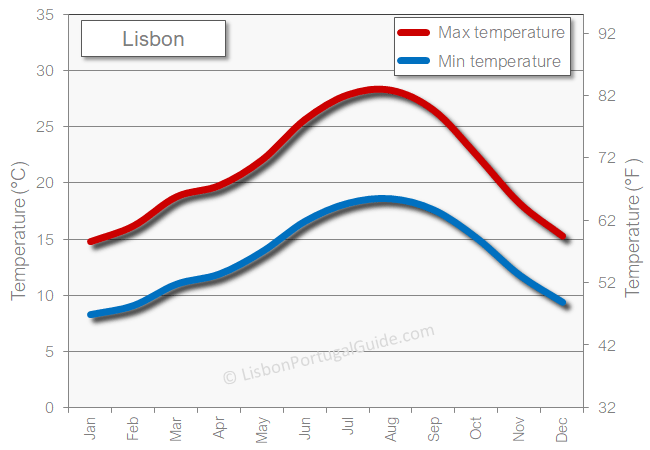
The maximum daytime temperature and nighttime minimum
Summer in Lisbon (July and August)
Summer in Lisbon offers blue skies and intense heat, with daytime temperatures regularly exceeding 32°C. Official temperature figures do not capture how the heat truly feels, as they measure the air temperature in the shade. Sightseeing under the intense midday sun will feel considerably hotter.
I personally avoid anything strenuous or outdoors between 1pm and 4pm, and this is the time of day I retreat to an air-conditioned museum or enjoy a leisurely lunch. To explore Lisbon in the summer, start early in the day to finish the majority of sightseeing before lunch, and then enjoy a leisurely afternoon.
Thankfully, Lisbon has two features which make the summer heat considerably more bearable: the low humidity and the refreshing evening winds. Lisbon is without the oppressive humidity of many tropical locations. The heat is "dry", and staying well hydrated makes a real difference.
Most evenings around sunset, strong Atlantic breezes blow in from the west to cool the city. These winds die down around 9pm and nights will feel hot, still and uncomfortable without air conditioning.
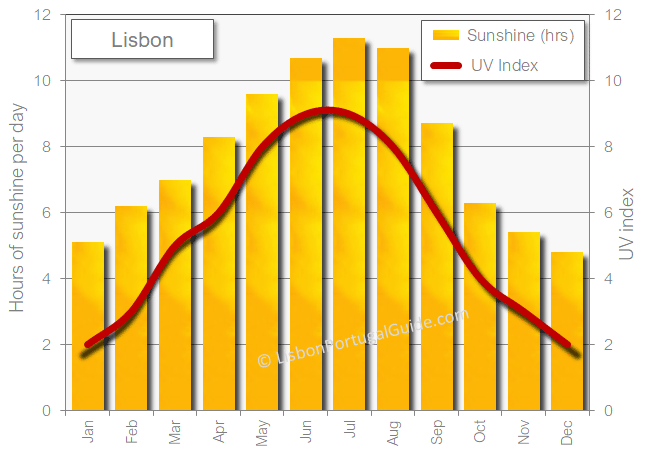
The average daily hours of sunshine and UV index for Lisbon throughout the year
The shoulder seasons (May and June, September and October)
The shoulder seasons, either side of the summer, are the best times of year to visit Lisbon and are what I always recommend to friends and family. The weather is glorious; hot enough for the beach but not too draining for sightseeing, and absolutely no chance of rain. May and June bring the blooming of the Jacaranda trees, turning Lisbon's plazas and streets purple. One of the best spots to enjoy them is the Largo do Carmo, sat with a galão coffee at the outdoor Quiosque do Carmo.
These months are ideal for sightseeing, day trips and activities, be that exploring Óbidos, kayaking at Sesimbra or wandering the Feira da Ladra market. If I can, these are the months I try to spend the most time in Lisbon, as the city is at its finest. Evenings in late October and early May can be chilly.
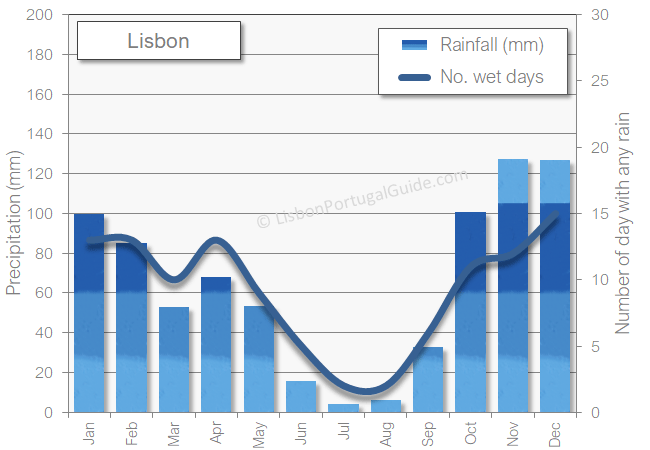
The changeable months (March, April and November)
These are the transition months between the good weather of summer and wetter weather of winter. The best way to describe them is unpredictable. There will be extended periods of fine dry weather, but these will be broken up by an intense downpour.
The temperatures are just a little low for sunbathing on the beaches, but warm enough for t-shirts in the middle of the day. These are the months when my suitcase is most full, as I need to bring a bit of everything: jacket, shorts, flip flops, suntan lotion and a warm jumper.
April can be a surprisingly wet month, with frequent intense rains blowing in from the Atlantic. Unlike the winter, these are not prolonged rains, just short and intense, but still enough to ruin a trip to Sintra.
Lisbon in the Winter (December to February)
Winter in Lisbon is mild by northern European standards, but the real issue is the possible wet weather. I’ve experienced weeks of sunny mild winter weather (14°C) and an equal amount of prolonged periods of grey wetness. Winters are simply unpredictable, so you need to have flexible plans and the ability to make the best of a wet few days.
It doesn’t help that the city was built for summertime heat, not winter. For example, my 1920s flat in Graça has no permanent heating and we bring out an electric heater that we move around with us. Often it feels warmer outside than in, and our flat is no different to the hundreds of Airbnbs or rental apartments throughout Lisbon. Also the damp Atlantic air makes it feel much chillier than a thermometer suggests.
A winter break does have the advantage of cheap flights and bargains on accommodation, but do set realistic expectations. Winter in Lisbon is very different to spring and summer.
Is Lisbon a year-round destination?
Lisbon's popularity as a tourist destination has surged in recent years, and this has extended the tourist season to the point where visitors now arrive throughout the year. However, just because you can visit in any month does not mean every month is equally suited for your trip.
In my opinion, Lisbon is not a year-round destination, and should definitely not be referred to as a winter sun destination. I have chatted to many tourists who travelled during December or January expecting to enjoy outdoor sightseeing and day trips to Sintra, only to have their plans ruined by persistent rain. If you do plan a winter trip to Lisbon, my key advice is to have flexible plans. Always have options and activities ready to fill in for wet days and loose plans that can vary depending on the weather.
That said, Lisbon does enjoy the mildest winter weather of any European capital city. Just have realistic expectations: sunshine is possible but far from guaranteed, and you should be prepared for cool, rainy days.
Equally, for me August can be just as poor as mid-winter. I find it too busy, with long queues for everything, reservations needed for any decent restaurant, and packed trains to reach any beach. All of these peak season issues, along with the intense midday heat and sweltering hot nights, mean it is not for me.
Have you booked your hotel yet?
You may be at the very early stages of planning your trip to Lisbon, but be aware that the best accommodation sells out well in advance, especially during peak season. I always tell friends to book as soon as possible to secure the best prices and location. The map below shows hotels and rental rooms in central Lisbon. Adjust the dates to match your trip and the map will display current availability and prices.
The Festas dos Santos Populares
My favourite time of year to be in Lisbon is during the Festas dos Santos Populares (Popular Saints Festival), which for Lisbon runs through the first two weeks of June. These celebrations mark the feast days of Saint John, Saint Peter, and, most importantly for Lisbon, Saint Anthony, the unofficial patron saint of the city. His feast day is on the 13th of June and the two weeks prior are when Lisbon celebrates.
There will be nightly traditional dances in the historic neighbourhoods of Alfama, Bica, and Graça, while party-focused Bairro Alto has late night DJ sets and bands. During the festivities, the streets are decorated with colourful streamers, while images of Saint Anthony and sardines are hung from balconies. The Festas dos Santos Populares also tie in with the start of the Sardine fishing season, and there will be makeshift BBQs across the city serving the nightly revellers.
The atmosphere builds throughout the first two weeks of June, culminating on the night of 12th June with a carnival procession and a city-wide celebration. The smell of grilled sardines fills the streets, traditional Pimba music echoes between the buildings, and there is an incredible energy as thousands of people celebrate together until sunrise. The 13th of June is a public holiday in Lisbon, and on this day, the city falls quiet as everyone sleeps in after the previous night's revelries.
If you are at the very early stages of planning a trip to Lisbon and have flexibility, being in Lisbon between the 3rd and 13th of June is an unmissable experience.
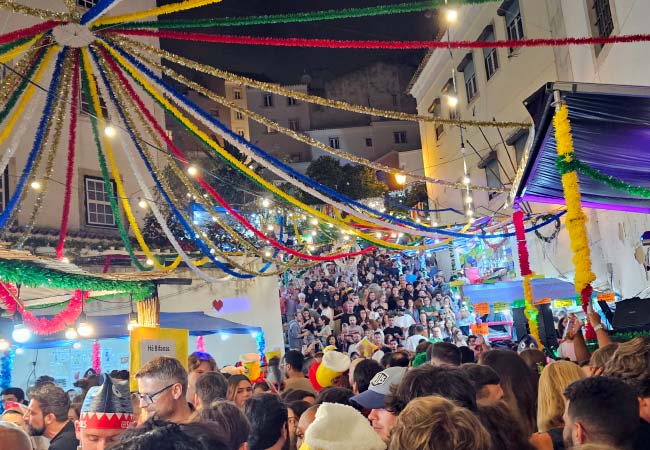
The Alfama district during the Festas dos Santos Populares
The Cold Sea
It surprises many visitors to Lisbon's beaches that the sea is so cold, reaching only 19°C even at the height of summer. If you are expecting Mediterranean-style bathing, you may be in for a shock – even in the summer I wear a full wetsuit when surfing at Costa da Caparica.
The chilly sea waters are in part due to the Atlantic Ocean, but also caused by slow-moving currents from the north that drag much colder water along the coast. This is also combined with coastal upwelling, where the Nortada winds from the north push the warmer water out into the ocean, which draws up much cooler water from the depths. These two processes mean the seas around Lisbon are always chilly.
When my brother and his family came to Sesimbra last year at the end of June for a week's holiday, it was only my nine-year-old nephew who would spend any time in the water. Do not underestimate how cold it is.
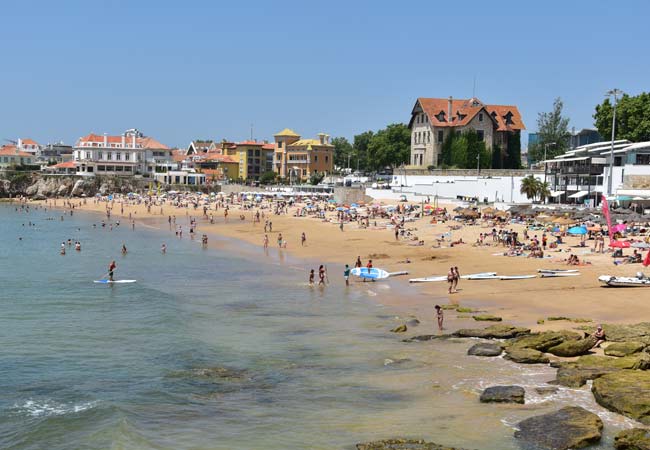
A sunny day in Cascais in July, but notice how few people are in the water.
The Summer Peak Season (June – August)
The peak tourist season runs from June until the end of August, and during this period the city buzzes with energy. Cafés spill onto pavements, rooftop bars fill up at sunset, and the historic neighbourhoods stay lively well into the evening. Summer in Lisbon is hot but rarely unbearable, thanks to the cooling influence of the Atlantic Ocean and the evening breezes that sweep through the city's hills.
Our advice: Close to Lisbon are some fantastic beaches, and summer is the ideal season to combine city sightseeing with time by the sea. My favourite beach is Carcavelos, or for surfing head to the Costa da Caparica. Cascais makes for a pleasant mix of beach and charming town.
The main drawback of visiting during summer is the pressure on accommodation and flights. Demand far outstrips supply, which pushes prices up considerably. Popular hotels and well-located apartments sell out weeks or even months in advance. If you are considering a summer trip to Lisbon, we strongly recommend booking your flights and accommodation as early as possible to secure the best options and avoid inflated last-minute prices.
Related articles: Lisbon beaches
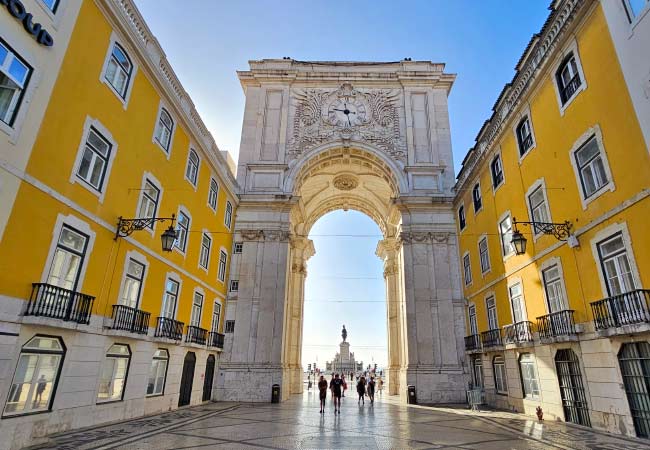
The middle Season (March, April, May and September and October)
The shoulder season is a wonderful time to visit Lisbon and, in our view, the best period for sightseeing, day trips, or a touring holiday around Portugal. The weather is generally pleasant, with daytime temperatures ranging from 20°C to 27°C, and the main tourist attractions are noticeably less crowded than in summer. Accommodation availability is good, and there is always the chance of finding last-minute deals on flights and hotels.
Despite being outside peak season, Lisbon still attracts plenty of visitors during these months. The tourist districts of Baixa, Bairro Alto, and Alfama retain a lively atmosphere, with busy restaurants and a steady hum of activity in the streets. The shoulder season is particularly well suited to weekend city breaks or group trips, whether you are planning a golfing holiday, a celebration, or simply want to explore the city without the summer crowds.
A note on spring weather: March and April can bring heavy downpours, though these rarely last more than an hour. Pack a compact umbrella and be prepared for the occasional shower, but do not let it put you off: the city looks beautiful in spring, with jacaranda trees blooming purple across the hillsides in May.
My advice: The shoulder season is the ideal season for exploring the Lisbon region with day trips to Sintra, Óbidos, Évora, and Setúbal. I like nothing better than to visit these places without the summer crowds or heat.
Related articles: 3 days in Lisbon – 1 week in Lisbon
The Winter Season in Lisbon
The winter season in Lisbon runs from November until the end of February. The weather during these months is unpredictable: you may enjoy a week of bright sunshine followed by several days of grey skies and persistent rain. This inconsistency is the main challenge for visitors hoping to make the most of their trip.
The popular day trips from Lisbon, including Sintra, Cascais, Sesimbra, and Óbidos, are far less enjoyable in wet or cold conditions. Sintra in particular, with its hilltop palaces and forest paths, is best appreciated in dry weather. That said, if the rain does arrive, Lisbon itself offers plenty of indoor attractions to fill your time. The city has excellent museums, historic churches, covered markets, and cosy cafés where you can wait out a shower.
For visitors seeking reliable winter sunshine in Portugal, the Algarve along the southern coast offers considerably better weather than Lisbon. If you are choosing between Portuguese cities for a winter break, Lisbon is in turn warmer and drier than Porto, which sits further north and receives more rainfall.
Our advice: If you plan to visit Lisbon in winter, keep your itinerary flexible. Have a mix of outdoor plans and indoor alternatives ready, and be prepared to swap them around depending on the forecast. Checking the weather a day or two ahead and adjusting your schedule accordingly will help you make the most of whatever conditions you encounter.
Related articles: Activities for a rainy day in Lisbon
Discover more of Lisbon with our most popular guides


About this guide: I'm Philip Giddings. I live in Graça with my Portuguese wife Carla, whose family are Lisboetas going back generations. I've been visiting Portugal since 2001, writing the independent guides at LisbonLisboaPortugal.com since 2009, and the site is now my full-time work. Carla first brought me up to Lisbon on an early trip, and twenty-five years on we are still walking the city together: summers on the packed beaches, quiet Saturdays at the Feira da Ladra, and hunting for a heater for our flat when the chilly winter arrives.
This site has 189 guides on Lisbon. It takes no payment from tourist boards, tour operators, or attractions for inclusion, and is funded by affiliate commissions on tour bookings, disclosed on every page that contains them. Every practical detail (ticket prices, opening hours, bus routes, time-slot policies) is checked against the official sources and verified in person on the walks I make through the city each week. Read the full story here.